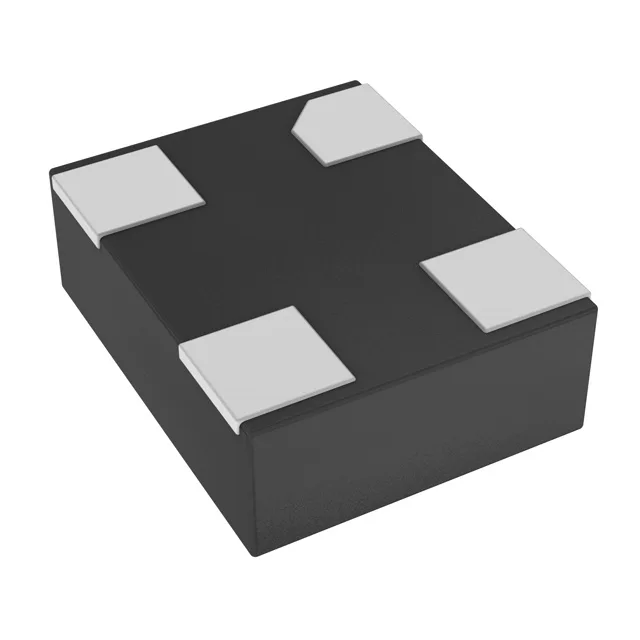
Microchip Technology DSC1001CC1-032.0000T — Crystals & Oscillators

DSC1001CC1-032.0000T Microchip MEMS XO 32 MHz CMOS AEC-Q100

MPNDSC1001CC1-032.0000T
Active

Microchip DSC1001 series MEMS XO, 32 MHz CMOS output, ±50 ppm stability, 1.8V–3.3V supply, AEC-Q100 rated, 4-SMD package.

Independent supplier — new & surplus stockAuthenticity-screened · ESD-safe packingListing updated Aug 2026

Specifications

DSC1001CC1-032.0000T specifications
ParameterValue
TypeXO (Standard)
SeriesDSC1001
MountingSurface Mount
Supply voltage1.8V ~ 3.3V
Current - supply7.2mA
Current - supply (Disable)15µA
Frequency32 MHz
Frequency stability±50ppm
Operating temperature0°C~70°C
Size (Dimension)0.126\" L x 0.098\" W (3.20mm x 2.50mm)
Height - seated0.035\" (0.90mm)
OutputCMOS
PackageTape & Reel (TR)
RatingsAEC-Q100
FunctionStandby (Power Down)
Base resonatorMEMS
Case4-SMD, No Lead

Product details

The DSC1001CC1-032.0000T: It carries AEC-Q100 qualification, meaning the part has passed automotive-grade reliability stress tests — suitable for use in infotainment, ADAS sensor modules, or telematics units where the oscillator must hold frequency under thermal cycling and vibration. Supply voltage spans 1.8V to 3.3V, so it can run directly off a 1.8V core rail or a 3.3V I/O rail without a separate regulator — a single BOM line covers multiple power domains.

Standby function and low-power profile

Active current draw is 7.2 mA max at 32 MHz — low enough that the oscillator's contribution to the total power budget is negligible in battery-powered edge nodes.

Frequently asked questions

What is the difference between DSC1001CC1 and DSC1001BC1?

The DSC1001BC1 variant typically specifies a different frequency stability grade or temperature range. The 'CC1' suffix on this part indicates ±50 ppm stability over 0°C–70°C. Confirm the exact BC1 datasheet for its stability and temperature rating before substituting.

Can DSC1001CC1-032.0000T be used in automotive applications?

Yes, it carries AEC-Q100 qualification, which covers the reliability stress and temperature requirements for automotive-grade electronics.