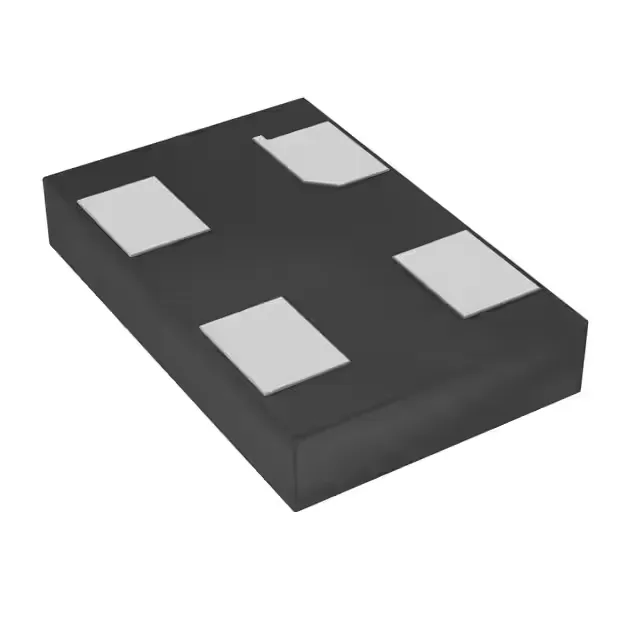
Microchip Technology DSC1001BL5-133.3330T — Crystals & Oscillators

DSC1001BL5-133.3330T – Microchip MEMS Oscillator

MPNDSC1001BL5-133.3330T
Active

Microchip Technology DSC1001 series MEMS-based XO (Standard), 133.333 MHz CMOS output, ±10 ppm stability, 1.8V–3.3V supply, AEC-Q100 qualified, -40°C to 105°C operating range.

Independent supplier — new & surplus stockAuthenticity-screened · ESD-safe packingListing updated Aug 2026

Specifications

DSC1001BL5-133.3330T specifications
ParameterValue
TypeXO (Standard)
SeriesDSC1001
MountingSurface Mount
Supply voltage1.8V ~ 3.3V
Current - supply8.7mA
Current - supply (Disable)15µA
Frequency133.333 MHz
Frequency stability±10ppm
Operating temperature-40°C~105°C
Size (Dimension)0.197\" L x 0.126\" W (5.00mm x 3.20mm)
Height - seated0.035\" (0.90mm)
OutputCMOS
PackageTape & Reel (TR)
RatingsAEC-Q100
FunctionStandby (Power Down)
Base resonatorMEMS
Case4-SMD, No Lead

Product details

The DSC1001BL5-133.3330T is a MEMS-based oscillator from Microchip's DSC1001 series, delivering a 133.333 MHz CMOS clock output with ±10 ppm frequency stability across its full -40°C to 105°C range.

Standby mode and supply flexibility

The 1.8V to 3.3V supply range covers the common digital logic rails; the same order code works across a 1.8V FPGA bank, a 2.5V SerDes reference, or a 3.3V MCU clock input.

Housed in a 4-SMD, No Lead package measuring 5.00 mm x 3.20 mm with a seated height of 0.90 mm — a standard footprint that matches many quartz oscillators of the same size, easing a drop-in replacement.

Frequently asked questions

Is DSC1001BL5-133.3330T AEC-Q100 qualified?

Yes, the DSC1001BL5-133.3330T carries AEC-Q100 qualification, making it suitable for automotive applications requiring the reliability stress testing and temperature grade that qualification certifies.

Does DSC1001BL5-133.3330T support standby mode?

Yes, the part has a Standby (Power Down) function. When the enable pin is pulled low, the output is disabled and the supply current drops to 15 µA max. Pulling the pin high or leaving it floating enables the output.