Why choose a MEMS oscillator over quartz at 95 MHz?
The DSC1001BL5-095.0000 uses a MEMS resonator instead of a quartz crystal, which means it can survive the shock and vibration that cracks a quartz blank — a common failure mode in engine-bay ECUs and industrial motor drives. The 95 MHz CMOS output runs from a 1.8V to 3.3V supply rail, so it drops into designs that already have a 3.3V or 1.8V oscillator footprint without a level translator.
Automotive-grade temperature range and qualification
An ECU or ADAS sensor module that sees 105°C ambient on a hot day still has margin before the oscillator drifts off frequency. The ±10ppm frequency stability holds across the full temperature range, which matters for CAN FD or Ethernet clocking where jitter budget is tight.
Standby function and power-down current
The standby (power-down) function drops supply current to 15µA max when the enable pin is pulled low — useful for battery-backed modules that need to wake on a bus event.
Package and board-level fit
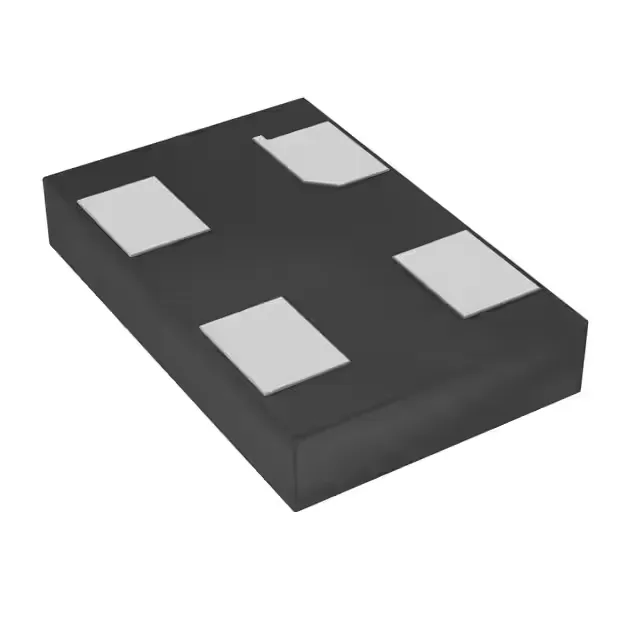
Housed in a 4-SMD, no-lead package measuring 5.00mm x 3.20mm with a seated height of 0.90mm. The 4-pin footprint is standard for this class of oscillator — no special fan-out or via-in-pad required. Surface-mount reflow profile follows standard JEDEC for lead-free solder; no moisture sensitivity level concern for a ceramic MEMS package.