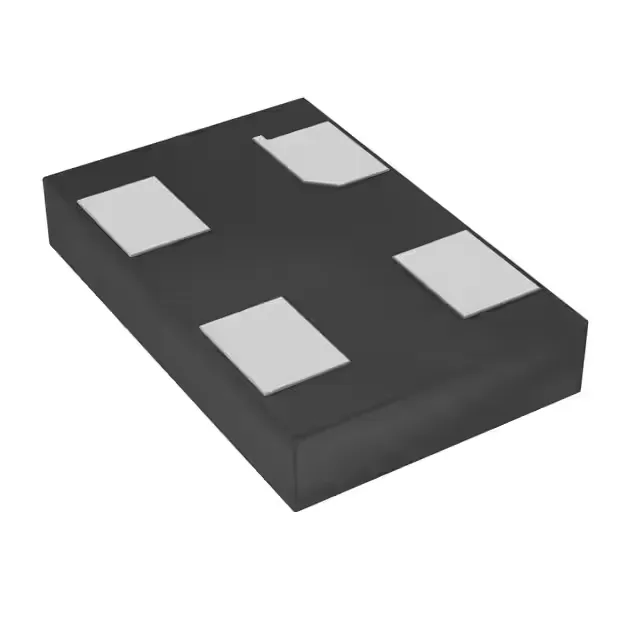
Microchip Technology DSC1001BL5-008.0000T — Crystals & Oscillators

DSC1001BL5-008.0000T MEMS Oscillator 8MHz CMOS AEC-Q100

MPNDSC1001BL5-008.0000T
Active

Microchip DSC1001BL5-008.0000T, XO (Standard) 8 MHz CMOS MEMS oscillator, ±10 ppm stability, 1.8V–3.3V supply, AEC-Q100, 4-SMD no-lead package.

Sourced new & surplus through independent channelsAuthenticity-screened · ESD-safe packingListing updated Aug 2026

Specifications

DSC1001BL5-008.0000T specifications
ParameterValue
TypeXO (Standard)
SeriesDSC1001
MountingSurface Mount
Voltage1.8V ~ 3.3V
Current - supply6.3mA
Current - supply (Disable)15µA
Frequency8 MHz
Frequency stability±10ppm
Operating temperature-40°C~105°C
Size (Dimension)0.197\" L x 0.126\" W (5.00mm x 3.20mm)
Height - seated0.035\" (0.90mm)
OutputCMOS
PackageTape & Reel (TR)
RatingsAEC-Q100
FunctionStandby (Power Down)
Base resonatorMEMS
Case4-SMD, No Lead

Product details

MEMS resonator, not quartz

That means it handles shock and vibration better than a quartz can, and there is no quartz supply chain to worry about. At 8 MHz with CMOS output, it drops straight onto a 4-SMD no-lead footprint.

Automotive-grade timing

That covers under-hood ECUs, cabin controllers, and chassis modules — the PPAP paperwork is already in the qualification. The ±10 ppm frequency stability keeps the clock edge tight enough for CAN, LIN, and basic Ethernet without needing a separate TCXO.

Low power, standby capable

Draws 6.3 mA max at 8 MHz — low enough for always-on sensor nodes or battery-backed RTC applications. The standby function pulls only 15 µA max when disabled, so you can gate the oscillator off during sleep modes without draining the battery. Supply voltage range is 1.8V to 3.3V, which covers 1.8V core logic and 3.3V peripheral rails with the same part.

Frequently asked questions

Can DSC1001BL5-008.0000T replace a standard quartz oscillator on my board?

Yes — it is a drop-in replacement for any 8 MHz CMOS oscillator in a 5.0 mm × 3.2 mm 4-SMD no-lead package. The MEMS resonator is more shock-tolerant than quartz, so it is a good upgrade for automotive or industrial environments. The supply voltage range (1.8V–3.3V) and CMOS output are compatible with most digital clock inputs. No board spin needed if the footprint matches.