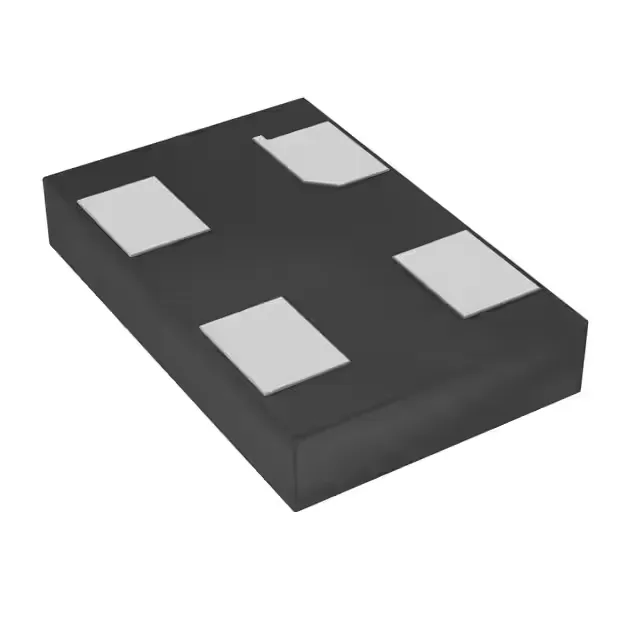
Microchip Technology DSC1001BI2-100.0000T — Crystals & Oscillators

DSC1001BI2-100.0000T MEMS XO, 100 MHz, AEC-Q100

MPNDSC1001BI2-100.0000T
Active

Microchip Technology DSC1001 series, XO (Standard) MEMS oscillator, DSC1001BI2-100.0000T, 100 MHz, CMOS output, ±25 ppm stability, AEC-Q100 qualified, -40°C to +85°C, 4-VDFN package.

$1.4000Ref. price · indicative, final on quote
Independent supplier — new & surplus stockAuthenticity-screened · ESD-safe packingListing updated Aug 2026

Specifications

DSC1001BI2-100.0000T specifications
ParameterValue
TypeXO (Standard)
SeriesDSC1001
MountingSurface Mount
Supply voltage1.8V ~ 3.3V
Current - supply8.7mA
Current - supply (Disable)15µA
Frequency100 MHz
Frequency stability±25ppm
Operating temperature-40°C~85°C
Size (Dimension)0.197\" L x 0.126\" W (5.00mm x 3.20mm)
Height - seated0.035\" (0.90mm)
OutputCMOS
PackageTape & Reel (TR); Cut Tape (CT)
RatingsAEC-Q100
FunctionStandby (Power Down)
Base resonatorMEMS
Case4-VDFN

Product details

The DSC1001BI2-100.0000T: AEC-Q100 qualification means this part meets the stress and reliability requirements for automotive electronics — suitable for engine control units, ADAS sensors, and infotainment modules that see under-hood or cabin temperature extremes.

The standby pin is active-low; pulling it low disables the output and cuts the oscillator current to the 15 µA figure, which is useful for battery-backed or ignition-controlled modules that must draw minimal quiescent current when off.

Frequently asked questions

Does DSC1001BI2-100.0000T have AEC-Q100 automotive qualification?

Yes, the DSC1001BI2-100.0000T is AEC-Q100 qualified, meaning it has passed the stress tests and reliability screening required for automotive-grade ICs.

What is the output type of DSC1001BI2-100.0000T?

The output is CMOS, which is a single-ended logic level compatible with most digital inputs on MCUs, FPGAs, and SoCs.

Can DSC1001BI2-100.0000T replace DSC1001BI1-100.0000T?

Both parts share the same DSC1001 series, 100 MHz frequency, and 4-VDFN package. The key difference is the frequency stability grade — the BI2 suffix indicates ±25 ppm, while the BI1 suffix indicates a different stability rating. Confirm the stability requirement of your design before substituting.