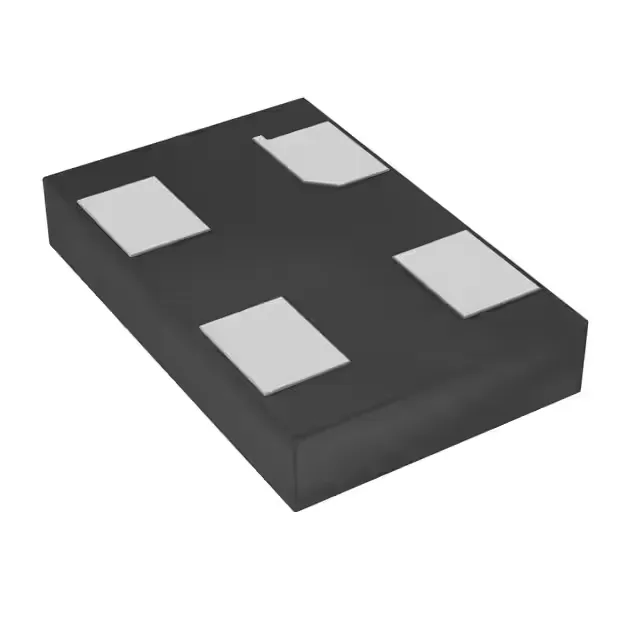
Microchip Technology DSC1001BI2-075.0000 — Crystals & Oscillators

DSC1001BI2-075.0000 MEMS Oscillator – Microchip, 75 MHz

MPNDSC1001BI2-075.0000
Active

Microchip Technology DSC1001 series, XO (Standard) MEMS oscillator, 75 MHz CMOS output, ±25 ppm stability, 1.8V–3.3V supply, AEC-Q100 qualified, -40°C to +85°C, 4-SMD no-lead package.

Independent supplier — new & surplus stockAuthenticity-screened · ESD-safe packingListing updated Aug 2026

Specifications

DSC1001BI2-075.0000 specifications
ParameterValue
TypeXO (Standard)
SeriesDSC1001
MountingSurface Mount
Supply voltage1.8V ~ 3.3V
Current - supply8.7mA
Current - supply (Disable)15µA
Frequency75 MHz
Frequency stability±25ppm
Operating temperature-40°C~85°C
Size (Dimension)0.197\" L x 0.126\" W (5.00mm x 3.20mm)
Height - seated0.035\" (0.90mm)
OutputCMOS
PackageTube
RatingsAEC-Q100
FunctionStandby (Power Down)
Base resonatorMEMS
Case4-SMD, No Lead

Product details

Automotive-grade MEMS oscillator for 75 MHz clock trees

The DSC1001BI2-075.0000: AEC-Q100 qualification means this part is tested and characterized for automotive-grade reliability — suitable for engine control units, ADAS sensor interfaces, and infotainment clock domains where a quartz failure is not an option. The supply voltage range spans 1.8V to 3.3V, letting the same oscillator serve multiple voltage domains without a separate regulator — a single BOM line covers 3.3V MCU and 1.8V FPGA banks.

Power-down function and standby current

Active current draw is 8.7 mA max at 75 MHz, keeping the thermal budget low in the 4-SMD no-lead package.

Frequently asked questions

Is the DSC1001BI2-075.0000 AEC-Q100 qualified?

Yes — the part carries AEC-Q100 ratings, meaning it has passed automotive-grade stress tests including temperature cycling, ESD, and latch-up.

What does the Standby (Power Down) function do?

When the standby pin is asserted, the oscillator stops and draws only 15 µA max from the supply. This is useful for automotive modules that must meet ignition-off quiescent current limits, or for battery-powered systems that gate the clock during sleep.