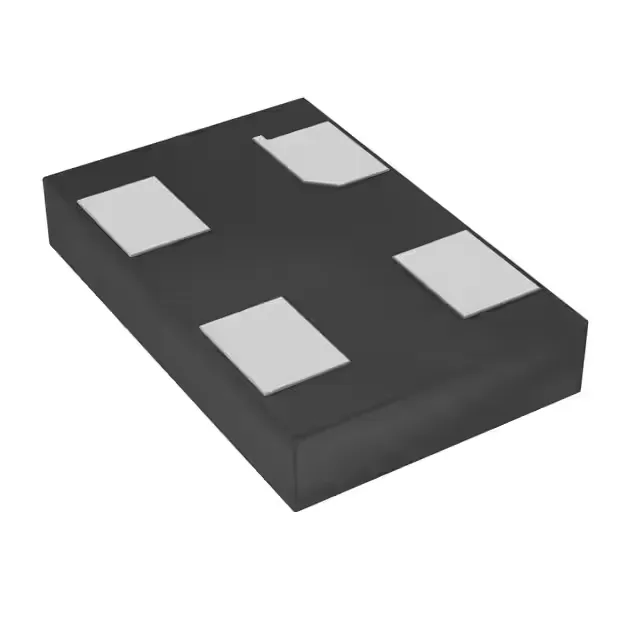
Microchip Technology DSC1001BI2-066.6660 — Crystals & Oscillators

DSC1001BI2-066.6660 MEMS XO – 66.666 MHz, ±25 ppm, AEC-Q100

MPNDSC1001BI2-066.6660
Active

Microchip DSC1001BI2-066.6660, MEMS-based XO (Standard), 66.666 MHz CMOS output, ±25 ppm frequency stability, AEC-Q100 qualified, 1.8V–3.3V supply, standby (power-down) function, -40°C to 85°C, 4-SMD no-lead package.

Sourced new & surplus through independent channelsAuthenticity-screened · ESD-safe packingListing updated Aug 2026

Specifications

DSC1001BI2-066.6660 specifications
ParameterValue
TypeXO (Standard)
SeriesDSC1001
MountingSurface Mount
Voltage1.8V ~ 3.3V
Current - supply7.2mA
Current - supply (Disable)15µA
Frequency66.666 MHz
Frequency stability±25ppm
Operating temperature-40°C~85°C
Size (Dimension)0.197\" L x 0.126\" W (5.00mm x 3.20mm)
Height - seated0.035\" (0.90mm)
OutputCMOS
PackageTube
RatingsAEC-Q100
FunctionStandby (Power Down)
Base resonatorMEMS
Case4-SMD, No Lead

Product details

66.666 MHz MEMS XO with AEC-Q100 grade

The AEC-Q100 qualification means it has passed the automotive-grade stress tests — temperature cycling, ESD, latch-up — required for cabin and chassis electronic control units. The 1.8V to 3.3V supply range lets it run from a common 3.3V or 1.8V rail without an extra regulator.

Standby power-down at 15 µA

The standby (power-down) function disables the output and drops the supply current to 15 µA maximum. In a battery-backed automotive module that sleeps between ignition cycles, this keeps the quiescent load negligible — the oscillator draws less than the module's own leakage.

The part is suitable for new designs and volume production. Sourced through independent distribution; quoted to order against the BOM quantity.

4-SMD no-lead package and board fit

Housed in a 4-SMD, no-lead package measuring 5.00 mm x 3.20 mm with a seated height of 0.90 mm. The surface-mount footprint is standard for 5.0 x 3.2 mm oscillators — no via-in-pad required. The MEMS resonator eliminates the quartz crystal's shock and vibration sensitivity, which is relevant for automotive and industrial environments where board-level mechanical stress is present.

Frequently asked questions

What is the frequency tolerance of the DSC1001BI2-066.6660?

This includes the combined effects of temperature, supply voltage, and aging. For a 66.666 MHz clock, ±25 ppm corresponds to a maximum frequency deviation of about ±1.67 kHz.

Is the DSC1001BI2-066.6660 AEC-Q100 qualified?

Yes, the DSC1001BI2-066.6660 carries an AEC-Q100 rating. This qualification covers the temperature grade, reliability stress tests, and PPAP documentation required for automotive applications.

What is the standby function of the DSC1001BI2-066.6660 and how does it work?

The standby (power-down) function disables the output and reduces the supply current to 15 µA maximum. When the standby pin is asserted, the internal MEMS resonator stops oscillating and the output goes to a high-impedance state. De-asserting standby restarts the oscillator; the downstream logic must tolerate the restart time before the clock is valid.