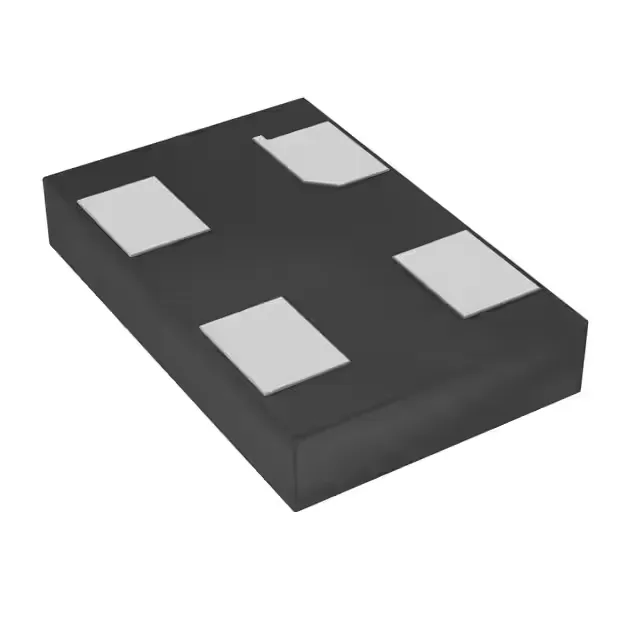
Microchip Technology DSC1001BI2-056.7500T — Crystals & Oscillators

DSC1001BI2-056.7500T Microchip MEMS XO, AEC-Q100, 56.75 MHz

MPNDSC1001BI2-056.7500T
Active

Microchip Technology DSC1001BI2-056.7500T, XO (Standard) MEMS oscillator, 56.75 MHz CMOS output, ±25 ppm stability, AEC-Q100 qualified, -40°C to +85°C, 4-SMD no-lead package.

Sourced new & surplus through independent channelsAuthenticity-screened · ESD-safe packingListing updated Aug 2026

Specifications

DSC1001BI2-056.7500T specifications
ParameterValue
TypeXO (Standard)
SeriesDSC1001
MountingSurface Mount
Voltage1.8V ~ 3.3V
Current - supply7.2mA
Current - supply (Disable)15µA
Frequency56.75 MHz
Frequency stability±25ppm
Operating temperature-40°C~85°C
Size (Dimension)0.197\" L x 0.126\" W (5.00mm x 3.20mm)
Height - seated0.035\" (0.90mm)
OutputCMOS
PackageTape & Reel (TR)
RatingsAEC-Q100
FunctionStandby (Power Down)
Base resonatorMEMS
Case4-SMD, No Lead

Product details

AEC-Q100 qualified for automotive cabin and chassis domains

The DSC1001BI2-056.7500T: The MEMS base resonator delivers ±25 ppm frequency stability across that temperature range, which is tight enough for a 56.75 MHz clock feeding a CAN-FD transceiver or a high-speed serial link without needing an external VCXO.

Standby power-down for battery-conscious modules

Supply flexibility and package footprint

Operates from a single 1.8V to 3.3V supply, which means the same BOM line serves 1.8V-core SoCs and 3.3V peripheral buses without a level translator on the clock output — the CMOS output swings rail-to-rail to the supply voltage. Housed in a 5.00 mm × 3.20 mm 4-SMD no-lead package with a seated height of 0.90 mm. The footprint matches the standard 5.0×3.2 mm oscillator land pattern — no via-in-pad required, and the 0.90 mm height clears most board-to-board stacking gaps.

Frequently asked questions

Does the DSC1001BI2-056.7500T have a standby or power-down mode?

Yes, the function is listed as Standby (Power Down). When the enable pin is driven low, the oscillator stops and draws 15 µA max. The output goes to high-impedance, allowing the clock line to be shared or pulled to a known state externally.