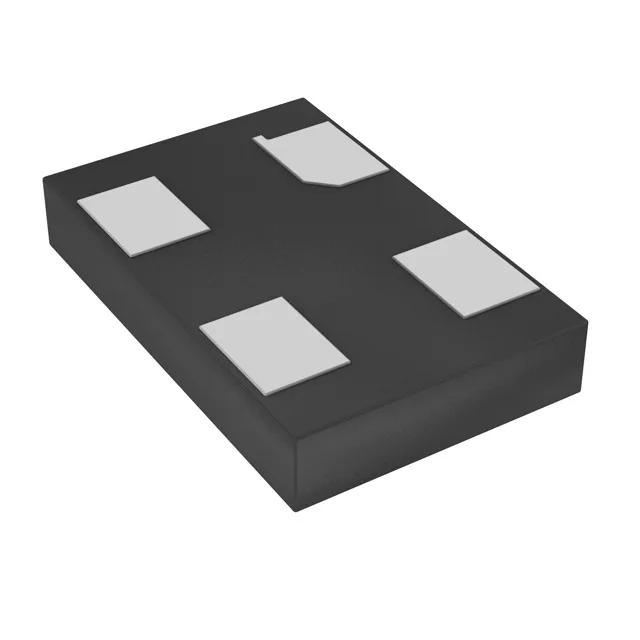
Microchip Technology DSC1001BI2-056.7500 — Crystals & Oscillators

DSC1001BI2-056.7500 MEMS XO – 56.75 MHz, CMOS, AEC-Q100

MPNDSC1001BI2-056.7500
Active

Microchip Technology DSC1001 series, XO (Standard), 56.75 MHz, CMOS output, ±25 ppm frequency stability, AEC-Q100 qualified, -40°C to 85°C, 7.2 mA max supply current.

Sourced new & surplus through independent channelsAuthenticity-screened · ESD-safe packingListing updated Aug 2026

Specifications

DSC1001BI2-056.7500 specifications
ParameterValue
TypeXO (Standard)
SeriesDSC1001
MountingSurface Mount
Voltage1.8V ~ 3.3V
Current - supply7.2mA
Current - supply (Disable)15µA
Frequency56.75 MHz
Frequency stability±25ppm
Operating temperature-40°C ~ 85°C
Size (Dimension)0.197\" L x 0.126\" W (5.00mm x 3.20mm)
Height - seated0.035\" (0.90mm)
OutputCMOS
PackageTube
RatingsAEC-Q100
FunctionStandby (Power Down)
Base resonatorMEMS
Case4-SMD, No Lead

Product details

An OEM auditor will expect PPAP documentation; the AEC-Q100 mark gives you the starting evidence.

Frequency stability and supply range for a clean clock

For a 56.75 MHz clock, ±25 ppm means the output stays within ±1419 Hz of the nominal frequency across temperature. That is tight enough for a CAN-FD or FlexRay controller that expects a 0.5% clock tolerance; it is also tight enough for a high-speed serial data link (e.g., 100BASE-T1) where the PLL jitter budget is single-digit picoseconds. At 56.75 MHz, the output transition time is a fraction of the period, keeping the clock edge clean for the downstream flip-flop setup/hold window.

Standby power-down and current draw

The 7.2 mA max operating current at 56.75 MHz is low for a MEMS oscillator at this frequency; a comparable quartz-based oscillator often draws 10–15 mA. The savings add up in a multi-clock ECU.

Product status is Active. The DSC1001 series is a current production line from Microchip.

Frequently asked questions

What is the difference between DSC1001BI2-056.7500 and DSC1001BI2-050.0000?

The only difference is the output frequency: 56.75 MHz vs 50.0000 MHz. Both are in the DSC1001 series, share the same package (4-SMD, No Lead), same CMOS output, same ±25 ppm stability, same AEC-Q100 qualification, and same operating temperature range. The BOM must specify the exact frequency; a 50 MHz oscillator will not lock a PLL tuned for 56.75 MHz.

Is the DSC1001BI2-056.7500 a direct replacement for a quartz crystal oscillator in the same footprint?

It is pin-compatible with standard 5.0 mm × 3.2 mm 4-pad SMD oscillators — the same 0.197" × 0.126" footprint. The MEMS die inside is drop-in compatible with the quartz oscillator it replaces, provided the supply voltage (1.8 V to 3.3 V) and output type (CMOS) match the existing circuit. No board spin is required.