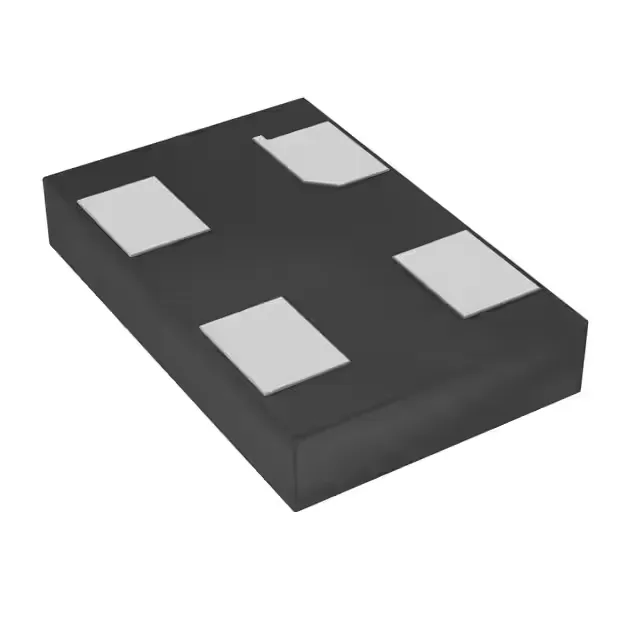
Microchip Technology DSC1001BI2-042.5000T — Crystals & Oscillators

DSC1001BI2-042.5000T MEMS Oscillator – 42.5 MHz, AEC-Q100

MPNDSC1001BI2-042.5000T
Active

Microchip Technology DSC1001BI2-042.5000T, XO (Standard) MEMS oscillator, 42.5 MHz CMOS output, ±25 ppm stability, 1.8V–3.3V supply, AEC-Q100, -40°C to 85°C, 4-SMD no-lead package.

Independent supplier — new & surplus stockAuthenticity-screened · ESD-safe packingListing updated Aug 2026

Specifications

DSC1001BI2-042.5000T specifications
ParameterValue
TypeXO (Standard)
SeriesDSC1001
MountingSurface Mount
Supply voltage1.8V ~ 3.3V
Current - supply7.2mA
Current - supply (Disable)15µA
Frequency42.5 MHz
Frequency stability±25ppm
Operating temperature-40°C~85°C
Size (Dimension)0.197\" L x 0.126\" W (5.00mm x 3.20mm)
Height - seated0.035\" (0.90mm)
OutputCMOS
PackageTape & Reel (TR)
RatingsAEC-Q100
FunctionStandby (Power Down)
Base resonatorMEMS
Case4-SMD, No Lead

Product details

The DSC1001BI2-042.5000T is a standard XO (oscillator) built on a MEMS resonator rather than a quartz crystal — the MEMS structure gives it better shock and vibration tolerance than a quartz oscillator, and the frequency is factory-programmed to 42.5 MHz with a CMOS output.

When the standby (power-down) pin is asserted, the oscillator draws a maximum of 15 µA — low enough that a battery-backed real-time clock domain can keep the oscillator off until a wake event, saving the 7.2 mA active supply current. The 7.2 mA max supply current at 42.5 MHz is typical for a MEMS oscillator at this frequency; the CMOS output swings rail-to-rail, so no external termination resistor is needed for short PCB traces.

Frequently asked questions

What is the frequency of the DSC1001BI2-042.5000T?

42.5 MHz, fixed at the factory. The part number encodes the frequency — there is no user-programmable option.

Is the DSC1001BI2-042.5000T AEC-Q100 qualified?

Yes, it carries AEC-Q100 ratings, which means it has passed the automotive-grade reliability stress tests (temperature cycling, ESD, latch-up) required for under-hood and cabin electronics.

What does the standby (power-down) function do?

Asserting the standby pin disables the output and drops the supply current to a maximum of 15 µA. The oscillator stops; the output goes high-impedance. This is useful for battery-powered systems that need to shut down the clock tree between active periods.

What is the output type of the DSC1001BI2?

CMOS.