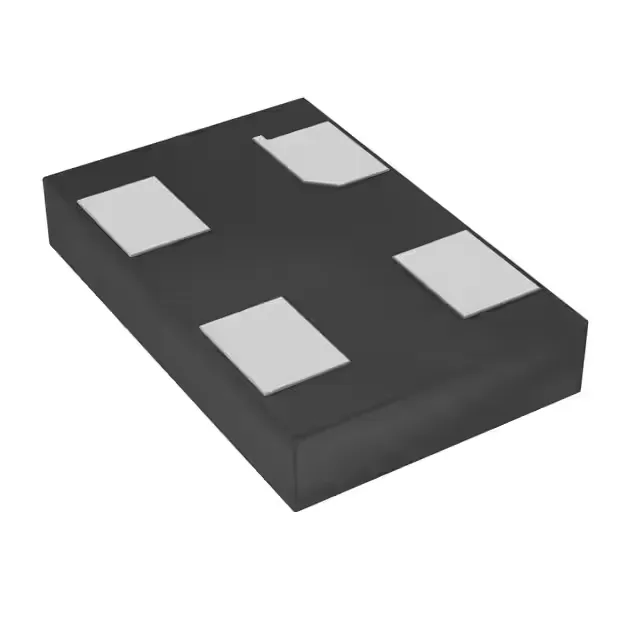
Microchip Technology DSC1001BI2-027.0000T — Crystals & Oscillators

DSC1001BI2-027.0000T MEMS XO – Microchip, 27 MHz, CMOS

MPNDSC1001BI2-027.0000T
Active

Microchip DSC1001 series MEMS XO, 27 MHz, CMOS output, ±25 ppm stability, 1.8V–3.3V supply, AEC-Q100, -40°C to 85°C, 4-SMD no-lead package, tape & reel.

Independent supplier — new & surplus stockAuthenticity-screened · ESD-safe packingListing updated Aug 2026

Specifications

DSC1001BI2-027.0000T specifications
ParameterValue
TypeXO (Standard)
SeriesDSC1001
MountingSurface Mount
Supply voltage1.8V ~ 3.3V
Current - supply7.2mA
Current - supply (Disable)15µA
Frequency27 MHz
Frequency stability±25ppm
Operating temperature-40°C~85°C
Size (Dimension)0.197\" L x 0.126\" W (5.00mm x 3.20mm)
Height - seated0.035\" (0.90mm)
OutputCMOS
PackageTape & Reel (TR)
RatingsAEC-Q100
FunctionStandby (Power Down)
Base resonatorMEMS
Case4-SMD, No Lead

Product details

The DSC1001BI2-027.0000T is a Microchip MEMS-based XO delivering a 27 MHz CMOS clock from a single 1.8V to 3.3V supply rail — no external load caps or tuning needed. Frequency stability of ±25 ppm keeps serial interfaces (CAN, LIN, Ethernet) within bit-timing margins without a TCXO.

Standby mode and supply flexibility

The 1.8V–3.3V input range covers 1.8V, 2.5V, and 3.3V logic families without a separate supply rail — one part number serves multiple voltage domains on the same BOM.

Package and footprint for production assembly

Housed in a 5.00 mm × 3.20 mm 4-SMD no-lead package (0.90 mm seated height), the DSC1001BI2-027.0000T is a drop-in fit for standard 5×3.2 mm XO footprints.

Frequently asked questions

Does DSC1001BI2-027.0000T support a 3.3V supply?

Yes — the supply range is 1.8V to 3.3V, so 3.3V is within the operating envelope. No external regulator or level shifter is needed for a 3.3V rail.

Is there a pin-compatible alternative to DSC1001BI2-027.0000T?

Within the DSC1001 series, other frequency and stability variants share the same package and pinout — for example, a 25 MHz or 50 MHz version with the same ±25 ppm stability and AEC-Q100 rating. Confirm the exact frequency and stability requirement before substituting.