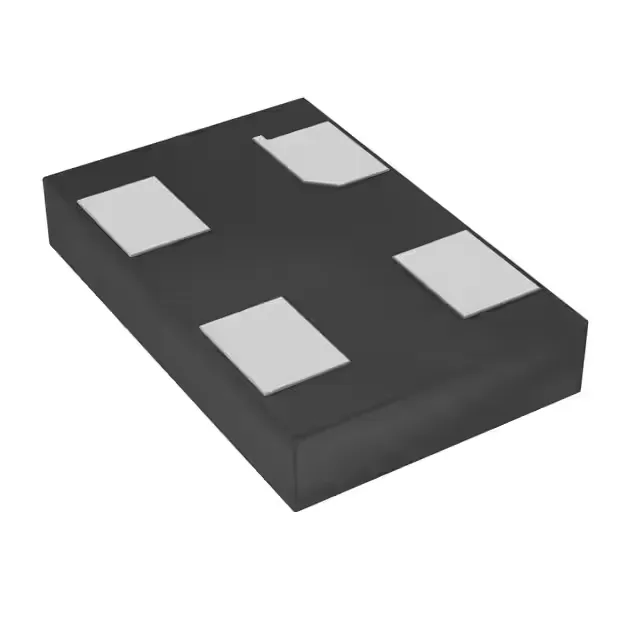
Microchip Technology DSC1001BI2-022.5790T — Crystals & Oscillators

DSC1001BI2-022.5790T Microchip MEMS XO 22.579 MHz CMOS

MPNDSC1001BI2-022.5790T
Active

Microchip Technology DSC1001BI2-022.5790T, XO (Standard) MEMS oscillator, 22.579 MHz, CMOS output, ±25 ppm stability, AEC-Q100 qualified, -40°C to 85°C, 4-SMD no-lead package.

Sourced new & surplus through independent channelsAuthenticity-screened · ESD-safe packingListing updated Aug 2026

Specifications

DSC1001BI2-022.5790T specifications
ParameterValue
TypeXO (Standard)
SeriesDSC1001
MountingSurface Mount
Voltage1.8V ~ 3.3V
Current - supply6.3mA
Current - supply (Disable)15µA
Frequency22.579 MHz
Frequency stability±25ppm
Operating temperature-40°C~85°C
Size (Dimension)0.197\" L x 0.126\" W (5.00mm x 3.20mm)
Height - seated0.035\" (0.90mm)
OutputCMOS
PackageTape & Reel (TR)
RatingsAEC-Q100
FunctionStandby (Power Down)
Base resonatorMEMS
Case4-SMD, No Lead

Product details

Automotive-grade MEMS clock for infotainment and telematics

The DSC1001BI2-022.5790T is a MEMS-based XO (Standard) oscillator delivering a 22.579 MHz CMOS output — the exact frequency needed for 44.1 kHz audio sample-rate clocks in automotive infotainment head units and digital signal processors.

Timing margin and supply flexibility

The supply voltage spans 1.8V to 3.3V, so the same oscillator BOM line serves 1.8V-core SoCs and 3.3V peripheral rails without a level translator on the clock output.

Housed in a 4-SMD, No Lead package measuring 5.00mm x 3.20mm with a seated height of 0.90mm — this is the standard 5.0 x 3.2 mm oscillator footprint, compatible with industry-standard land patterns and reflow profiles. Surface-mount mounting on a standard PCB; the no-lead package keeps the parasitic inductance low at 22.579 MHz, so the CMOS output edge rate is clean without series termination resistors in most layouts.

Frequently asked questions

Is the DSC1001BI2-022.5790T suitable for automotive designs?

Yes. The part is AEC-Q100 qualified, which means it has passed the automotive-grade reliability stress tests (temperature cycling, ESD, latch-up) required for PPAP submission.