MEMS oscillator at 100 MHz with CMOS output
The MEMS base resonator means no quartz crystal aging drift and faster start-up than a crystal-based oscillator — the device is ready to clock the bus within microseconds of power-up, not milliseconds. For a 100 MHz clock, that is a ±5 kHz window — tight enough for most MCU and FPGA reference clock inputs without needing a separate temperature-compensated oscillator.
Wide supply voltage and standby power-down
The supply voltage accepts 1.8V to 3.3V, letting one oscillator BOM position serve multiple core voltages across different board revisions — no separate LDO or rail splitter needed. In a battery-backed ECU or sensor module that sleeps most of the time, this keeps the oscillator's own draw below the leakage floor of the power supervisor.
AEC-Q100 qualification for automotive deployment
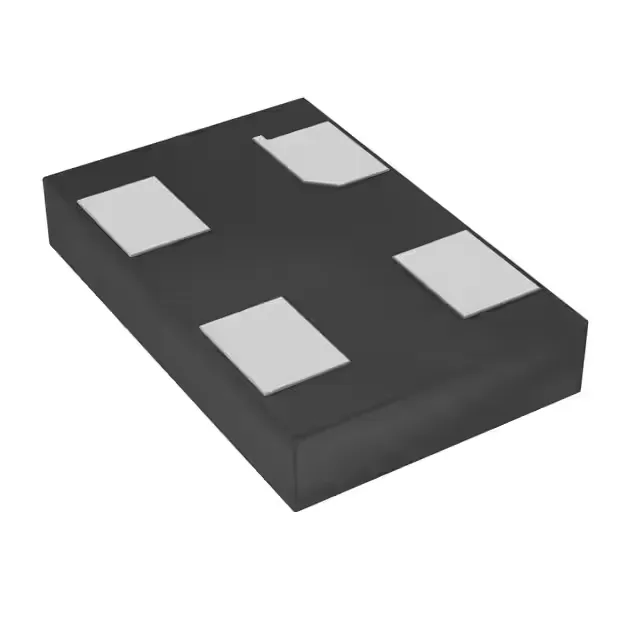
The 4-SMD no-lead package (5.00 mm x 3.20 mm footprint, 0.90 mm seated height) is a standard 4-pin land pattern shared across many MEMS oscillators — no via-in-pad or exotic fan-out required.
No official second source or pin-compatible drop-in is listed from Microchip, but the DSC1001 series covers a wide frequency range — if the BOM needs a different frequency, the same footprint and supply voltage apply.