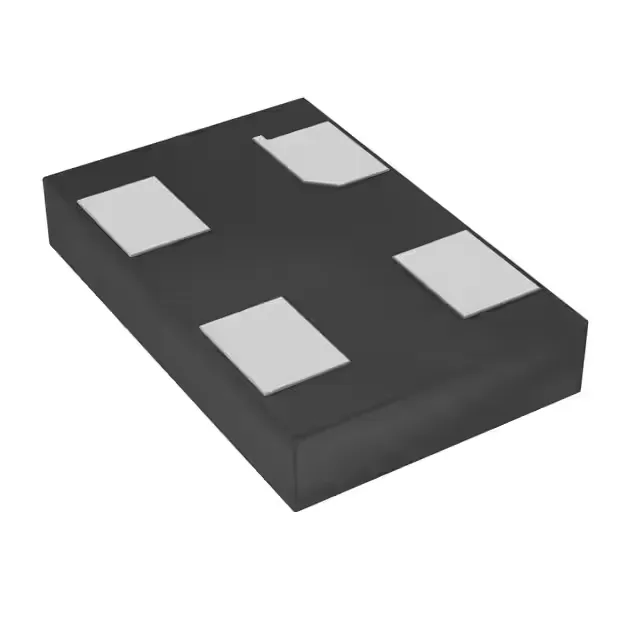
Microchip Technology DSC1001BI1-066.6666T — Crystals & Oscillators

DSC1001BI1-066.6666T MEMS XO, 66.6666 MHz, CMOS, AEC-Q100

MPNDSC1001BI1-066.6666T
Active

Microchip Technology DSC1001BI1-066.6666T, XO (Standard) MEMS oscillator, 66.6666 MHz, CMOS output, ±50 ppm stability, 1.8V~3.3V supply, AEC-Q100 qualified, -40°C~85°C

Sourced new & surplus through independent channelsAuthenticity-screened · ESD-safe packingListing updated Aug 2026

Specifications

DSC1001BI1-066.6666T specifications
ParameterValue
TypeXO (Standard)
SeriesDSC1001
MountingSurface Mount
Voltage1.8V ~ 3.3V
Current - supply7.2mA
Current - supply (Disable)15µA
Frequency66.6666 MHz
Frequency stability±50ppm
Operating temperature-40°C~85°C
Size (Dimension)0.197\" L x 0.126\" W (5.00mm x 3.20mm)
Height - seated0.035\" (0.90mm)
OutputCMOS
PackageTape & Reel (TR)
RatingsAEC-Q100
FunctionStandby (Power Down)
Base resonatorMEMS
Case4-SMD, No Lead

Product details

66.6666 MHz MEMS oscillator with AEC-Q100 grade

AEC-Q100 qualification means this part passed the automotive-grade reliability stress tests — temperature cycling, ESD, latch-up — making it suitable for under-hood and chassis-domain ECUs where a standard crystal oscillator would risk drift or failure. The standby (power-down) function on pin 1 drops the supply current to 15 µA max, which is the difference between a module that drains the battery overnight and one that passes the OEM's quiescent-current spec.

Supply voltage tolerance and current budget

The supply voltage range spans 1.8V to 3.3V — a single BOM line can serve a 1.8V-core MCU on one board and a 3.3V peripheral on another without a separate oscillator variant. Maximum operating current is 7.2 mA at the highest frequency and supply; in standby the part draws 15 µA max, so a CAN transceiver or ignition-switched module can leave the oscillator powered continuously without exceeding the sleep-mode budget.

Package and mounting for production

Housed in a 4-SMD, no-lead package measuring 5.00 mm x 3.20 mm with a seated height of 0.90 mm — a standard footprint that matches many 5x3.2 mm XO footprints, so a board layout for a quartz oscillator often accepts this MEMS part without a pad change. Supplied on tape and reel (TR) for automated pick-and-place; the MEMS die inside is inherently more shock- and vibration-tolerant than a quartz crystal, which matters for engine-bay and transmission-mounted electronics.

New designs can commit to this part without a near-term migration risk.

Frequently asked questions

Is the DSC1001BI1-066.6666T AEC-Q100 qualified?

Yes, it carries AEC-Q100 ratings, which means it passed the automotive-grade qualification suite: temperature cycling, ESD, latch-up, and extended life tests. This qualifies it for under-hood and chassis-domain electronics where commercial-grade oscillators would not be accepted.

What is the output signal type of the DSC1001BI1-066.6666T?

The output is CMOS — a rail-to-rail digital signal that interfaces directly with MCU clock inputs, FPGA clock pins, and Ethernet PHY reference clocks without external level translation.

What is the function of the standby pin on the DSC1001BI1-066.6666T?

The standby (power-down) function disables the output and reduces the supply current to 15 µA max. This is used in battery-backed or ignition-switched modules to meet quiescent current limits while keeping the oscillator ready for a fast wake-up.