AEC-Q100 Grade – qualified, not just capable
The OEM auditor will ask for PPAP; the AEC-Q100 listing on the datasheet is the first pass. For an under-hood engine-bay ECU that sees 105°C on a summer-grade road, you need Grade 1 or 0 – this part fits cabin, chassis, or ADAS sensor modules where the ambient stays below 85°C.
66.6666 MHz – the exact frequency for Ethernet and SERDES
66.6666 MHz is a common reference for 10/100/1000BASE-T Ethernet PHYs and many SERDES PLLs that multiply up to 125 MHz or 156.25 MHz. The ±50ppm frequency stability keeps the bit-error rate within the PHY's tracking range across temperature. The CMOS output drives standard logic inputs directly – no level translator or AC-coupling needed. The 7.2mA max supply current is the total draw at 66.6666 MHz; the standby mode drops it to 15µA for sleep states.
The supply voltage range is 1.8V to 3.3V – this single part covers 1.8V, 2.5V, and 3.3V logic rails without a separate regulator.
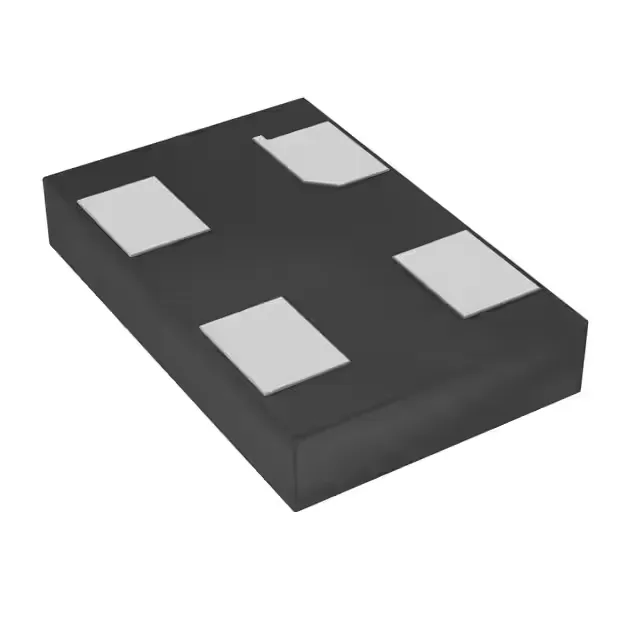
The 4-SMD, No Lead package measures 5.00mm x 3.20mm with a seated height of 0.90mm max – a compact footprint for space-constrained PCBs. Surface-mount reflow soldering is standard; the no-lead construction eliminates side-wetting inspection.
Lifecycle status and sourcing
No pin-compatible second source or successor is listed by Microchip, but the DSC1001 series shares the same MEMS resonator and package, so a different frequency variant is a drop-in if the BOM tolerance allows.