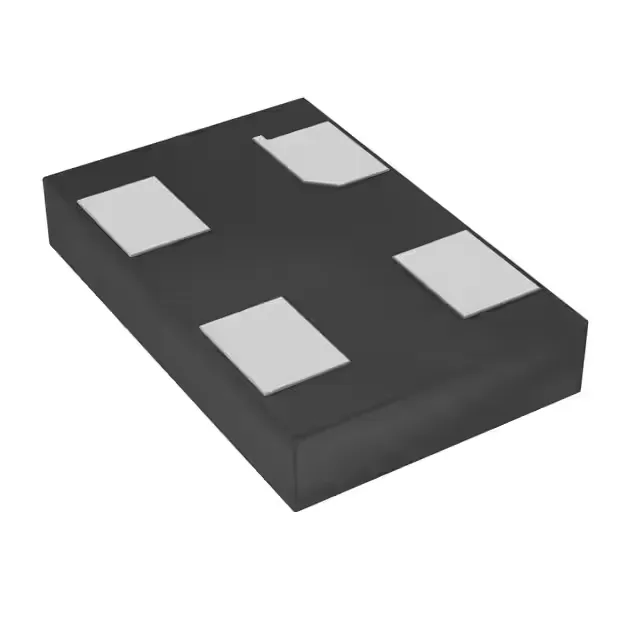
Microchip Technology DSC1001BI1-004.0000 — Crystals & Oscillators

DSC1001BI1-004.0000 MEMS XO – AEC-Q100, 4 MHz, CMOS

MPNDSC1001BI1-004.0000
Active

Microchip DSC1001BI1-004.0000, MEMS-based XO (Standard), 4 MHz CMOS output, ±50 ppm stability, 1.8V–3.3V supply, -40°C to +85°C, AEC-Q100 qualified, 4-SMD no-lead package.

$0.9450Ref. price · indicative, final on quote
Independent supplier — new & surplus stockAuthenticity-screened · ESD-safe packingListing updated Aug 2026

Specifications

DSC1001BI1-004.0000 specifications
ParameterValue
TypeXO (Standard)
SeriesDSC1001
MountingSurface Mount
Supply voltage1.8V ~ 3.3V
Current - supply6.3mA
Current - supply (Disable)15µA
Frequency4 MHz
Frequency stability±50ppm
Operating temperature-40°C~85°C
Size (Dimension)0.197\" L x 0.126\" W (5.00mm x 3.20mm)
Height - seated0.035\" (0.90mm)
OutputCMOS
PackageTube
RatingsAEC-Q100
FunctionEnable/Disable
Base resonatorMEMS
Case4-SMD, No Lead

Product details

The DSC1001BI1-004.0000: AEC-Q100 qualification places this part in the automotive-grade band — it is rated for the thermal and reliability stresses of under-hood and chassis-domain electronics, not just cabin infotainment.

Maximum supply current is 6.3 mA; at 4 MHz the dynamic draw is modest, but the 6.3 mA ceiling is the figure to budget for the worst-case corner (low voltage, high temperature, full load).

Housed in a 5.00 mm × 3.20 mm no-lead package with a 0.90 mm seated height — the footprint matches many quartz XO land patterns, easing a drop-in swap from crystal to MEMS. Surface-mount assembly; the no-lead construction keeps the parasitic inductance low, which matters for the CMOS output edge rates at 4 MHz.

Frequently asked questions

Is DSC1001BI1-004.0000 AEC-Q100 qualified?

Yes — it carries AEC-Q100 ratings, meaning it has passed the automotive-grade stress tests (temperature cycling, ESD, latch-up) and is qualified for use in automotive applications.

Does DSC1001BI1-004.0000 have an enable/disable function?

Yes — the part includes an Enable/Disable function. When disabled, the maximum supply current drops to 15 µA, allowing the clock output to be gated without powering down the oscillator.