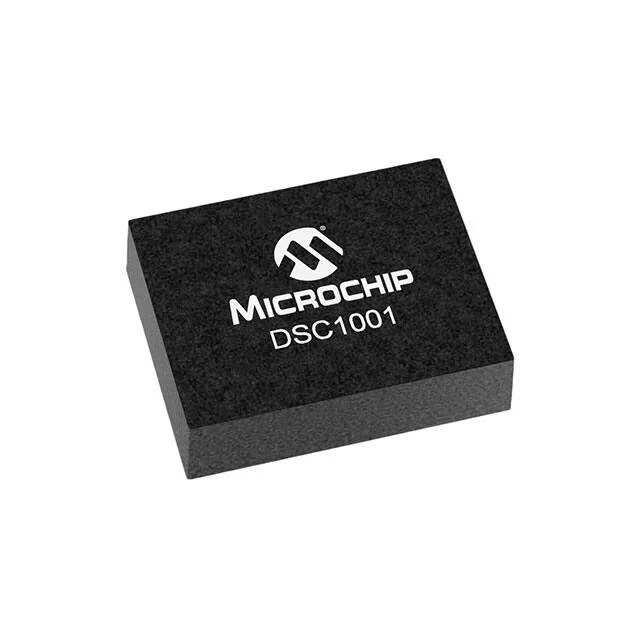
Microchip Technology DSC1001BI1-002.0480T — Crystals & Oscillators

DSC1001BI1-002.0480T MEMS Oscillator – Microchip, 2.048 MHz

MPNDSC1001BI1-002.0480T
Active

Microchip Technology DSC1001 series, XO (Standard) MEMS oscillator, 2.048 MHz CMOS output, ±50 ppm stability, 1.7 V to 3.6 V supply, AEC-Q100 qualified, -40°C to 85°C, 4-VDFN package, Tape & Reel

Independent supplier — new & surplus stockAuthenticity-screened · ESD-safe packingListing updated Aug 2026

Specifications

DSC1001BI1-002.0480T specifications
ParameterValue
TypeXO (Standard)
SeriesDSC1001
MountingSurface Mount
Supply voltage1.7V ~ 3.6V
Current - supply6.5mA
Current - supply (Disable)15µA
Frequency2.048 MHz
Frequency stability±50ppm
Operating temperature-40°C~85°C
Size (Dimension)0.197\" L x 0.126\" W (5.00mm x 3.20mm)
Height - seated0.035\" (0.90mm)
OutputCMOS
PackageTape & Reel (TR)
RatingsAEC-Q100
FunctionStandby (Power Down)
Base resonatorMEMS
Case4-VDFN

Product details

That certification is the gate for under-hood and cabin electronics; a non-qualified oscillator would require a separate qualification run, adding weeks to the PPAP timeline.

Standby (Power Down) function and supply current

Active current draw is 6.5 mA max, typical for a 2.048 MHz CMOS oscillator driving a 15 pF load.

4-VDFN package and board fit

Housed in a 4-VDFN package measuring 5.00 mm x 3.20 mm with a seated height of 0.90 mm. Surface-mount reflow profile follows JEDEC MSL-1 typical for MEMS oscillators; no moisture bake needed before assembly if the reel seal is intact.

Frequently asked questions

Is the DSC1001BI1-002.0480T AEC-Q100 qualified?

This makes it suitable for automotive applications such as body control modules, gateway ECUs, and sensor interfaces where a standard commercial oscillator would require a deviation request.

What is the standby function on this oscillator?

The standby (Power Down) function disables the output and reduces supply current to 15 µA max. The pin is typically active-low; pulling it low places the output in high-impedance state. This is useful for power-gated clock domains where the oscillator must not load the bus during sleep.

Can the DSC1001BI1-002.0480T replace a quartz crystal oscillator?

Yes — the MEMS resonator eliminates the quartz crystal's start-up time and mechanical fragility. The CMOS output is directly compatible with most clock inputs. However, confirm the load capacitance and drive strength match the downstream receiver; a quartz oscillator's output is typically a sine wave or clipped sine, while this part outputs a full-swing CMOS rail-to-rail signal.