The 1.8V to 3.3V supply range lets it run from a single low-voltage rail or drop into a multi-voltage design without a level translator on the clock line. Active current is 6.3 mA max; in Standby (Power Down) mode the disable current drops to 15 µA max — the oscillator stops and the output goes high-impedance, saving power during system sleep.
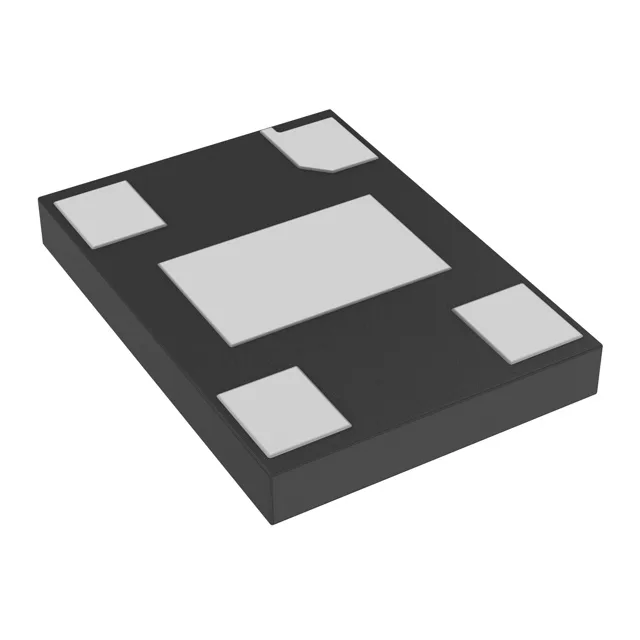
DSC1001AL5-016.0000T MEMS XO – 16 MHz, CMOS, AEC-Q100
MPNDSC1001AL5-016.0000T
Active
Microchip DSC1001AL5-016.0000T, XO (Standard) MEMS oscillator, 16 MHz, CMOS output, ±10 ppm stability, 1.8V–3.3V supply, -40°C to 105°C, AEC-Q100 qualified, 4-SMD package.
Sourced new & surplus through independent channelsAuthenticity-screened · ESD-safe packingListing updated Aug 2026
Specifications
| Parameter | Value |
|---|---|
| Type | XO (Standard) |
| Series | DSC1001 |
| Mounting | Surface Mount |
| Voltage | 1.8V ~ 3.3V |
| Current - supply | 6.3mA |
| Current - supply (Disable) | 15µA |
| Frequency | 16 MHz |
| Frequency stability | ±10ppm |
| Operating temperature | -40°C~105°C |
| Size (Dimension) | 0.276\" L x 0.197\" W (7.00mm x 5.00mm) |
| Height - seated | 0.035\" (0.90mm) |
| Output | CMOS |
| Package | Tape & Reel (TR) |
| Ratings | AEC-Q100 |
| Function | Standby (Power Down) |
| Base resonator | MEMS |
| Case | 4-SMD, No Lead Exposed Pad |
Product details
Frequently asked questions
Does the DSC1001AL5-016.0000T support a 1.8V supply?
Yes — the supply voltage range is 1.8V to 3.3V, so it operates from a 1.8V rail directly without an external regulator or level shifter.
What is the standby current of the DSC1001?
When the Standby (Power Down) function is active, the disable current is 15 µA max. The oscillator stops and the output goes high-impedance.
What is the difference between a MEMS oscillator and a crystal oscillator?
A MEMS oscillator (like this DSC1001) uses a silicon MEMS resonator instead of a quartz crystal. MEMS parts are generally more resistant to vibration and shock, have faster start-up, and are offered in standard CMOS packages. The frequency stability (±10 ppm here) is comparable to many quartz XOs, but the MEMS die is smaller and the supply voltage range is wider (1.8V–3.3V vs. a fixed crystal load capacitance requirement).