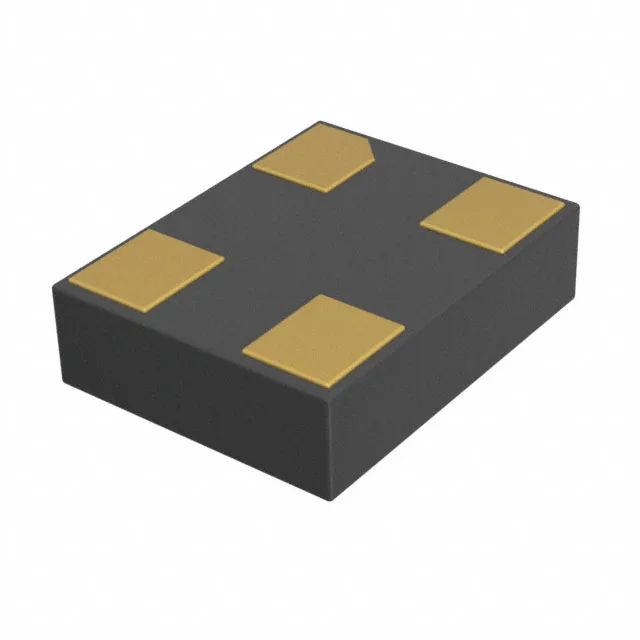
Microchip Technology DSC1001AI3-029.4912 — Crystals & Oscillators

DSC1001AI3-029.4912 – Microchip XO, 29.4912 MHz, CMOS

MPNDSC1001AI3-029.4912
Active

Microchip DSC1001AI3-029.4912, XO (Standard) oscillator, 29.4912 MHz CMOS output, ±20 ppm stability, AEC-Q100 qualified, 4-VDFN exposed pad package.

Sourced new & surplus through independent channelsAuthenticity-screened · ESD-safe packingListing updated Aug 2026

Specifications

DSC1001AI3-029.4912 specifications
ParameterValue
TypeXO (Standard)
SeriesDSC1001
MountingSurface Mount
Voltage1.7V ~ 3.6V
Current - supply10.5mA
Current - supply (Disable)15µA
Frequency29.4912 MHz
Frequency stability±20ppm
Operating temperature-40°C ~ 85°C
Size (Dimension)0.276\" L x 0.197\" W (7.00mm x 5.00mm)
Height - seated0.035\" (0.90mm)
OutputCMOS
PackageTube
RatingsAEC-Q100
FunctionStandby (Power Down)
Base resonatorCrystal
Case4-VDFN Exposed Pad

Product details

AEC-Q100 rated, active production – ready for automotive timing

The DSC1001AI3-029.4912 is a Microchip XO (Standard) oscillator rated AEC-Q100, confirming it for automotive temperature and reliability requirements.

Supply range and standby power-down function

Operating from a 1.7V to 3.6V supply, the oscillator draws a maximum of 10.5 mA when active.

4-VDFN package – layout and mounting

Housed in a 4-VDFN exposed pad package measuring 7.00 mm x 5.00 mm with a seated height of 0.90 mm, this surface-mount oscillator requires a thermal pad on the PCB for heat dissipation.

Frequently asked questions

Is the DSC1001AI3-029.4912 AEC-Q100 qualified?

Yes, this oscillator carries an AEC-Q100 rating, meaning it has passed automotive-grade stress tests including temperature cycling, ESD, and latch-up.

What is the output type and supply voltage range?

The output is CMOS, driving rail-to-rail logic levels directly. The supply voltage range is 1.7V to 3.6V, covering common 1.8V, 2.5V, and 3.3V rails.

What is the frequency stability of this oscillator?

This tight tolerance keeps the clock accurate for protocols like CAN or Ethernet that rely on precise bit timing.

Does the DSC1001AI3-029.4912 have a standby function?

Yes, it includes a standby (power down) function. When enabled, the output is disabled and supply current drops to 15 µA max, allowing the system to conserve power without removing the oscillator from the board.