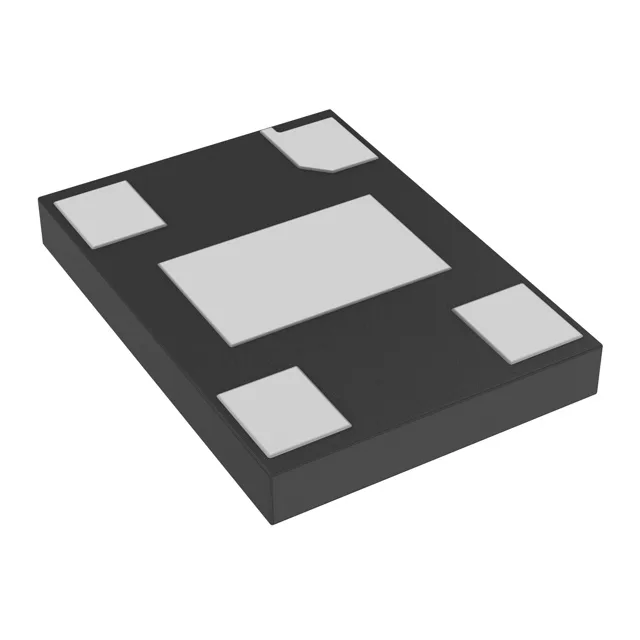
Microchip Technology DSC1001AI2-019.6608 — Crystals & Oscillators

DSC1001AI2-019.6608 MEMS Oscillator, 19.6608 MHz, AEC-Q100

MPNDSC1001AI2-019.6608
Active

Microchip Technology DSC1001 series, XO (Standard) MEMS oscillator, DSC1001AI2-019.6608, 19.6608 MHz CMOS output, ±25 ppm stability, AEC-Q100 qualified, -40°C to 85°C, 1.8V–3.3V supply, 4-SMD package.

Sourced new & surplus through independent channelsAuthenticity-screened · ESD-safe packingListing updated Aug 2026

Specifications

DSC1001AI2-019.6608 specifications
ParameterValue
TypeXO (Standard)
SeriesDSC1001
MountingSurface Mount
Voltage1.8V ~ 3.3V
Current - supply6.3mA
Current - supply (Disable)15µA
Frequency19.6608 MHz
Frequency stability±25ppm
Operating temperature-40°C~85°C
Size (Dimension)0.276\" L x 0.197\" W (7.00mm x 5.00mm)
Height - seated0.035\" (0.90mm)
OutputCMOS
PackageTube
RatingsAEC-Q100
FunctionStandby (Power Down)
Base resonatorMEMS
Case4-SMD, No Lead Exposed Pad

Product details

The DSC1001AI2-019.6608: The AEC-Q100 qualification means it meets automotive-grade reliability requirements for under-hood or cabin electronics.

Why choose MEMS over quartz?

Unlike a quartz crystal oscillator, the DSC1001 uses a silicon MEMS resonator. The MEMS construction also means faster start-up and no quartz aging effects over temperature.

At 6.3 mA max, the active current is low enough for battery-operated designs; the 15 µA standby current suits applications that spend most of their time in sleep mode, waking only to process data.

The AEC-Q100 qualification confirms it has passed the reliability stress tests (temperature cycling, HAST, etc.) required for automotive applications. The 4-SMD package with exposed pad (7.00mm x 5.00mm, 0.90mm seated height) fits standard reflow assembly processes.

Frequently asked questions

Is DSC1001AI2-019.6608 AEC-Q100 qualified for automotive use?

Yes, the DSC1001AI2-019.6608 carries an AEC-Q100 rating, meaning it has passed automotive-grade qualification for reliability under temperature, humidity, and mechanical stress.