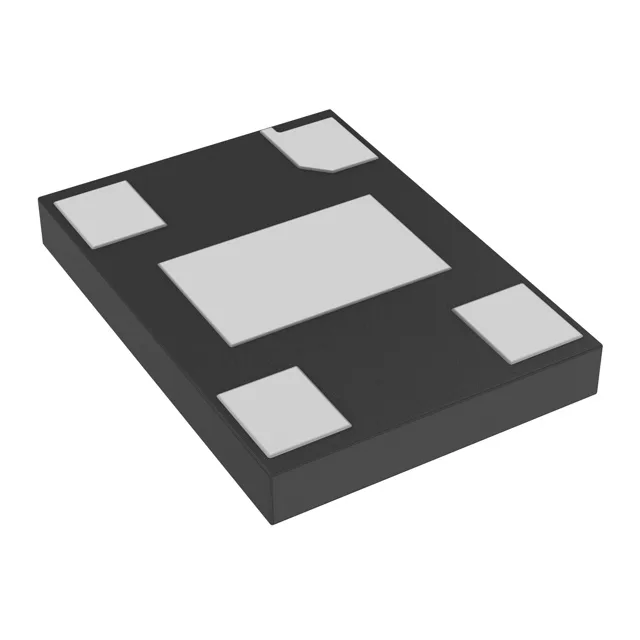
Microchip Technology DSC1001AI2-004.0000T — Crystals & Oscillators

DSC1001AI2-004.0000T MEMS XO – 4 MHz, CMOS, AEC-Q100, Active

MPNDSC1001AI2-004.0000T
Active

Microchip DSC1001 series, XO (Standard), 4 MHz, CMOS output, ±25 ppm stability, 1.8V–3.3V supply, AEC-Q100, -40°C to 85°C, 4-SMD package.

Sourced new & surplus through independent channelsAuthenticity-screened · ESD-safe packingListing updated Aug 2026

Specifications

DSC1001AI2-004.0000T specifications
ParameterValue
TypeXO (Standard)
SeriesDSC1001
MountingSurface Mount
Voltage1.8V ~ 3.3V
Current - supply6.3mA
Current - supply (Disable)15µA
Frequency4 MHz
Frequency stability±25ppm
Operating temperature-40°C~85°C
Size (Dimension)0.276\" L x 0.197\" W (7.00mm x 5.00mm)
Height - seated0.035\" (0.90mm)
OutputCMOS
PackageTape & Reel (TR)
RatingsAEC-Q100
FunctionStandby (Power Down)
Base resonatorMEMS
Case4-SMD, No Lead Exposed Pad

Product details

The DSC1001AI2-004.0000T is a 4 MHz MEMS-based XO with CMOS output, built on Microchip's DSC1001 series. It replaces a quartz crystal plus load caps with a single silicon resonator — no start-up time, no crystal drive-level tuning.

That matters for a CAN node that sleeps between bus messages — the oscillator's draw is below the transceiver's standby current, so it doesn't dominate the sleep budget. A 3.3V MCU and a 1.8V FPGA can use the same oscillator BOM line; the part auto-ranges.

The part draws 6.3 mA max, so self-heating is negligible. Tape & Reel (TR) packaging feeds straight into a pick-and-place; no manual handling needed.

Frequently asked questions

Is DSC1001AI2-004.0000T obsolete or end-of-life?

No. The product status is Active. There is no EOL notice from Microchip. It is suitable for both new designs and ongoing production.

What does the standby function do on this oscillator?

The standby (power-down) function disables the output and drops the supply current to 15 µA max. It is a logic-controlled pin — pulling it low puts the oscillator into a low-power state, ideal for battery-backed modules that wake periodically.