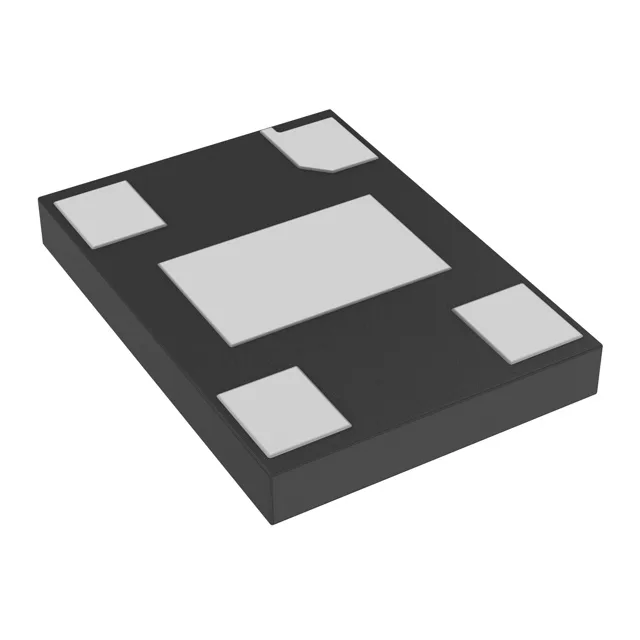
Microchip Technology DSC1001AI1-033.3333 — Crystals & Oscillators

DSC1001AI1-033.3333 MEMS XO – 33.334 MHz, AEC-Q100

MPNDSC1001AI1-033.3333
Active

Microchip Technology DSC1001AI1-033.3333, XO (Standard) MEMS oscillator, 33.334 MHz CMOS output, ±50 ppm stability, AEC-Q100, -40°C to 85°C, 4-SMD no lead exposed pad package.

$1.1700Ref. price · indicative, final on quote
Sourced new & surplus through independent channelsAuthenticity-screened · ESD-safe packingListing updated Aug 2026

Specifications

DSC1001AI1-033.3333 specifications
ParameterValue
TypeXO (Standard)
SeriesDSC1001
MountingSurface Mount
Voltage1.8V ~ 3.3V
Current - supply8mA
Frequency33.334 MHz
Frequency stability±50ppm
Operating temperature-40°C~85°C
Size (Dimension)0.276\" L x 0.197\" W (7.00mm x 5.00mm)
Height - seated0.035\" (0.90mm)
OutputCMOS
PackageTube
RatingsAEC-Q100
FunctionStandby (Power Down)
Base resonatorMEMS
Case4-SMD, No Lead Exposed Pad

Product details

The MEMS resonator base gives it inherent shock and vibration tolerance over quartz, and typically shorter factory lead times—a practical advantage for production schedules where quartz supply is constrained.

Standby function and supply voltage flexibility

Supply voltage range spans 1.8V to 3.3V, covering common digital core and I/O rails without an external level translator; maximum supply current is 8 mA at the rated frequency.

Surface-mount package and board integration

Housed in a 4-SMD, no lead exposed pad package measuring 7.00 mm x 5.00 mm with a seated height of 0.90 mm—a standard footprint that fits most PCB layouts without via-in-pad or special fan-out.

Frequently asked questions

What is the output frequency of DSC1001AI1-033.3333?

The DSC1001AI1-033.3333 outputs a fixed 33.334 MHz CMOS clock signal.

Does DSC1001AI1-033.3333 have AEC-Q100 qualification?

Yes, it is rated AEC-Q100, meaning it meets automotive-grade reliability and temperature requirements.

What is the standby function and current consumption for DSC1001AI1-033.3333?

The standby (power down) function disables the output and drops the supply current to a very low level—typically microamps—for battery-powered or intermittent operation.