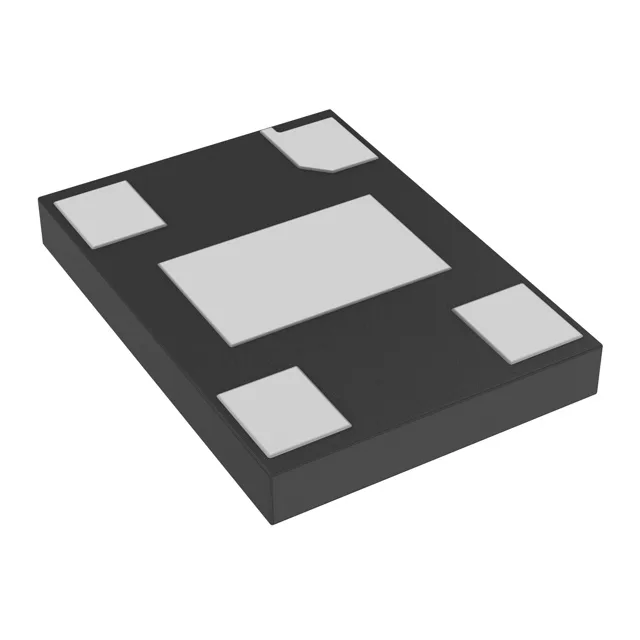
Microchip Technology DSC1001AE2-098.3040T — Crystals & Oscillators

DSC1001AE2-098.3040T MEMS Oscillator 98.304 MHz AEC-Q100

MPNDSC1001AE2-098.3040T
Active

Microchip DSC1001 series XO (Standard), 98.304 MHz, CMOS output, MEMS base, ±25 ppm stability, AEC-Q100, 1.8V–3.3V supply, 4-SMD no-lead exposed pad package.

Sourced new & surplus through independent channelsAuthenticity-screened · ESD-safe packingListing updated Aug 2026

Specifications

DSC1001AE2-098.3040T specifications
ParameterValue
TypeXO (Standard)
SeriesDSC1001
MountingSurface Mount
Voltage1.8V ~ 3.3V
Current - supply8.7mA
Current - supply (Disable)15µA
Frequency98.304 MHz
Frequency stability±25ppm
Operating temperature-20°C~70°C
Size (Dimension)0.276\" L x 0.197\" W (7.00mm x 5.00mm)
Height - seated0.035\" (0.90mm)
OutputCMOS
PackageTape & Reel (TR)
RatingsAEC-Q100
FunctionStandby (Power Down)
Base resonatorMEMS
Case4-SMD, No Lead Exposed Pad

Product details

Standby power-down and supply range

When the standby (power-down) pin is asserted, the oscillator draws 15 µA max — low enough to leave on a battery bus without draining the cell during sleep. The supply voltage spans 1.8V to 3.3V, so the same BOM line works across a 1.8V-core FPGA bank and a 3.3V peripheral bus without a separate level translator.

The 4-SMD no-lead exposed-pad package (7.00mm x 5.00mm, 0.90mm seated height) has a large thermal pad underneath — the pad needs a solid via array to the ground plane, or the part will overheat under the hot-air station.

Frequently asked questions

What is the frequency tolerance of the DSC1001AE2-098.3040T?

The frequency stability is ±25 ppm over the full -20°C to +70°C operating range and supply voltage variation. That is a standard industrial-grade tolerance — tight enough for a 100BASE-TX Ethernet clock or a USB full-speed reference.

What is the standby current consumption of the DSC1001AE2-098.3040T?

The standby (power-down) current is 15 µA maximum. When the part is disabled, the output goes high-impedance and the internal oscillator stops, so the only draw is leakage through the MEMS element and the control logic.