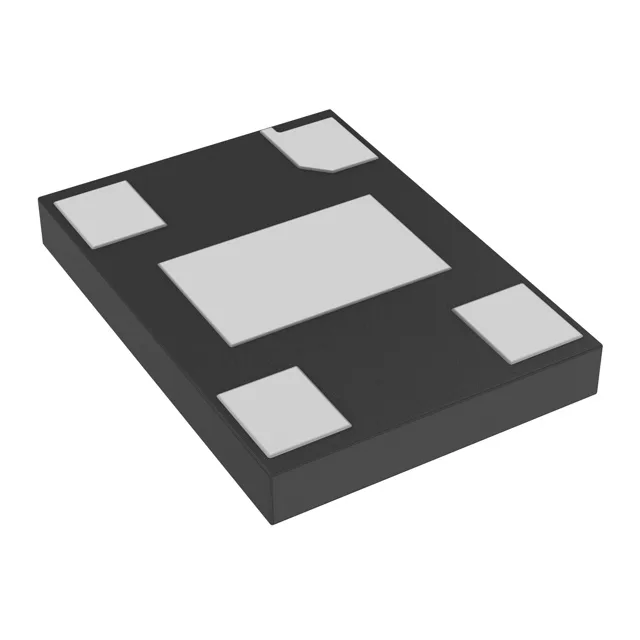
Microchip Technology DSC1001AE1-033.3333T — Crystals & Oscillators

DSC1001AE1-033.3333T MEMS Oscillator 33.3333 MHz CMOS

MPNDSC1001AE1-033.3333T
Active

Microchip Technology DSC1001AE1-033.3333T, XO (Standard) MEMS oscillator, 33.3333 MHz CMOS output, 1.8V-3.3V supply, ±50 ppm stability, AEC-Q100 qualified, -20°C~70°C operating range, 4-SMD package.

Sourced new & surplus through independent channelsAuthenticity-screened · ESD-safe packingListing updated Aug 2026

Specifications

DSC1001AE1-033.3333T specifications
ParameterValue
TypeXO (Standard)
SeriesDSC1001
MountingSurface Mount
Voltage1.8V ~ 3.3V
Current - supply7.2mA
Current - supply (Disable)15µA
Frequency33.3333 MHz
Frequency stability±50ppm
Operating temperature-20°C~70°C
Size (Dimension)0.276\" L x 0.197\" W (7.00mm x 5.00mm)
Height - seated0.035\" (0.90mm)
OutputCMOS
PackageTape & Reel (TR)
RatingsAEC-Q100
FunctionStandby (Power Down)
Base resonatorMEMS
Case4-SMD, No Lead Exposed Pad

Product details

The DSC1001AE1-033.3333T is a MEMS-based XO (Standard) oscillator delivering a 33.3333 MHz CMOS output from a 1.8V to 3.3V supply rail.

Standby power-down and disable current

The active-mode max draw is 7.2 mA, so the standby savings are real: the oscillator itself won't drain the coin cell during a parked vehicle's key-off period.

The 4-SMD, No Lead Exposed Pad package measures 7.00 mm x 5.00 mm with a seated height of 0.90 mm. That footprint matches the industry-standard 7x5 mm oscillator land pattern — no layout change needed if you are swapping in from a quartz XO. The exposed pad is not present, so the thermal path is through the package body; keep the ground plane under the part continuous for EMI containment.

Confirm availability at RFQ time.

Frequently asked questions

Is DSC1001AE1-033.3333T AEC-Q100 qualified?

Yes, it carries AEC-Q100 ratings.

How does a MEMS oscillator differ from a quartz crystal oscillator?

A quartz crystal relies on a mechanical resonator that can shift frequency after shock or vibration and requires a separate load capacitor network. The DSC1001AE1 uses a MEMS resonator — the resonant element is a silicon micro-structure sealed in a cavity. It is inherently more shock-tolerant, starts up faster (typical <5 ms vs quartz's 10+ ms), and does not need external load caps. The output is still a standard CMOS clock, so the downstream logic sees the same signal.