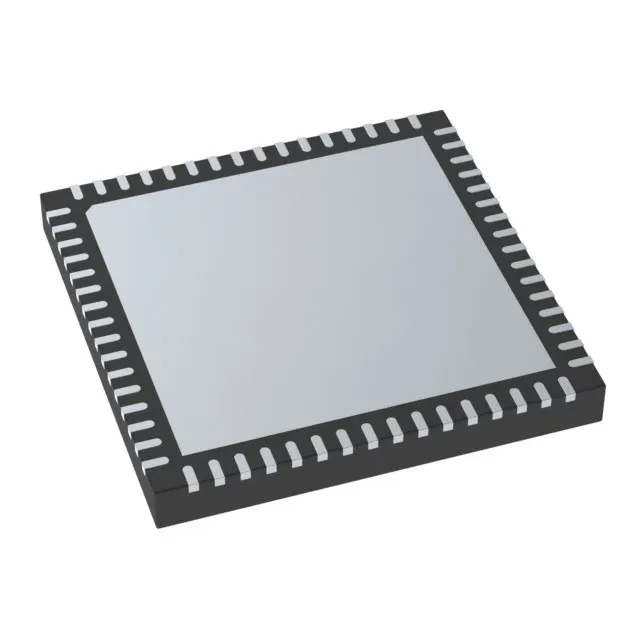
120 MHz Cortex-M4F with Ethernet MAC — what the connectivity tells you
That combination — a floating-point core at this speed with wired networking and parallel memory expansion — targets industrial gateways, motor-drive controllers, and IoT edge nodes that need to run a lightweight TCP/IP stack without an external PHY or a separate Ethernet controller chip.
The 512 KB Flash (512K x 8) gives room for a real-time OS, the Ethernet stack, and application code without constant wear-leveling gymnastics. The 192 KB SRAM handles two large ping-pong buffers for Ethernet frames (typical 1.5 KB MTU) plus a couple of 4 KB DMA descriptors, with headroom left for sensor data arrays. If you are migrating from a SAM D5x part, the extra SRAM here is the main reason to step up — the D5x tops out at 64 KB.
The 1.71 V floor also covers the 1.8 V logic rails common in low-power sensor hubs.
24-channel ADC and dual DAC — analog front-end integration
With 24 analog inputs multiplexed into a 12-bit ADC and two 12-bit DAC outputs, this part can sample a bank of current-sense resistors, thermistors, or strain gauges and then output an analog setpoint or trim voltage — all on one chip. The 51 GPIO pins leave plenty of room for parallel displays or external memory via the EBI.
Not rated for automotive under-hood (125°C), but fine for cabin or chassis-mount applications that stay inside that envelope.
Microchip lists the ATSAME53J19A-MU as Active (current production). ROHS3 compliant. For new designs, this is a safe selection — no imminent end-of-life concern.