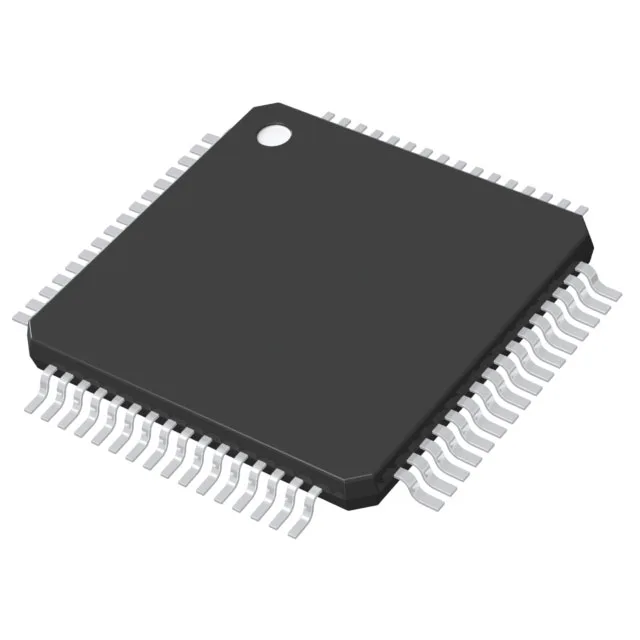
Microchip Technology ATSAMD51J20A-AUT — Microcontrollers & Processors (MCU / MPU / DSP)

ATSAMD51J20A-AUT Microchip ARM Cortex-M4F MCU, 120 MHz

MPNATSAMD51J20A-AUT
Active

Microchip SAM D51 series 32-bit ARM Cortex-M4F MCU, 120 MHz, 1 MB Flash, 256 KB SRAM, 64-TQFP, -40°C to 85°C, ROHS3 compliant.

$6.7200Ref. price · indicative, final on quote
Packaging64-TQFP
RoHSROHS3 Compliant
SeriesSAM D51
Independent supplier — new & surplus stockAuthenticity-screened · ESD-safe packingListing updated Jul 2026

Specifications

ATSAMD51J20A-AUT specifications
ParameterValue
SeriesSAM D51
MountingSurface Mount
Oscillator typeInternal
Program memory typeFLASH
Voltage - supply (Vcc (Vdd))1.71V ~ 3.63V
Operating temperature-40°C ~ 85°C (TA)
Speed120MHz
PackageTape & Reel (TR) Cut Tape (CT)
RAM size256K x 8
Core size32-Bit Single-Core
PeripheralsBrown-out Detect/Reset, DMA, I2S, POR, PWM
ConnectivityEBI/EMI, I2C, IrDA, LINbus, MMC/SD, QSPI, SPI, UART/USART, USB
Number of i (O)51
Core processorARM® Cortex®-M4F
Case64-TQFP
Data convertersA/D 24x12b; D/A 2x12b
Program memory size1MB (1M x 8)

Product details

The ATSAMD51J20A-AUT: The 120 MHz core with the FPU means a single-cycle multiply-accumulate and hardware divide, so a PID loop or an FFT bin runs without cycle-counting tricks. The 256 KB SRAM is dual-bank, which lets you ping-pong a DMA buffer for the ADC or the QSPI Flash without stalling the core. The internal oscillator trims to within 3% over temperature — adequate for UART bit rates, but if you need a USB clock within 0.25%, plan to feed the external crystal input.

The 64-TQFP (10x10 mm) has a 0.5 mm pitch — a two-layer board can route it if you keep the decoupling caps within 5 mm of each VDD pin.

Frequently asked questions

What is the difference between the ATSAMD51J20A and the ATSAMD51J19A?

The primary difference is Flash memory density: the ATSAMD51J20A carries 1 MB of Flash, while the ATSAMD51J19A has 512 KB. Both share the same 120 MHz Cortex-M4F core, 256 KB SRAM, 64-TQFP package, and peripheral set, so a firmware-size decision drives the choice.

What is the maximum clock speed of the ATSAMD51J20A?

The core is rated for 120 MHz operation. At this speed the Flash requires one wait state; the Cortex-M4F pipeline handles the penalty without stalling on sequential code.

Is the ATSAMD51J20A-AUT RoHS compliant?

Yes, it is listed as ROHS3 Compliant.