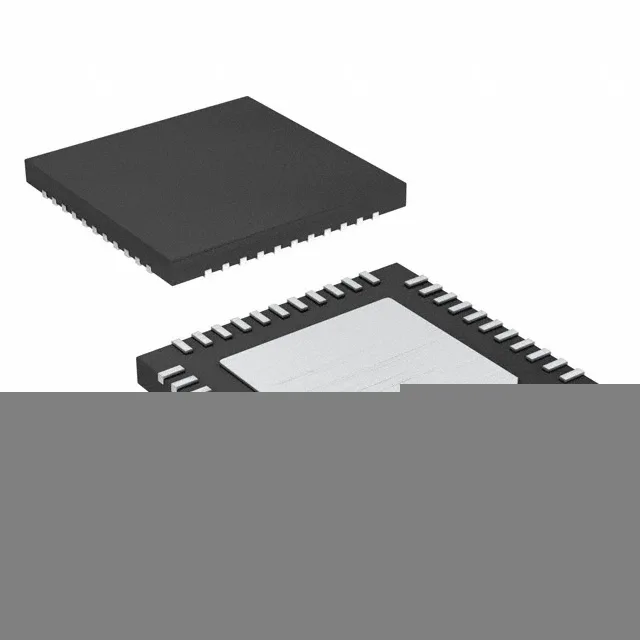
Microchip Technology ATMEGA644A-MU — Microcontrollers & Processors (MCU / MPU / DSP)

Microchip ATMEGA644A-MU 8-bit AVR MCU, 20 MHz, 64 KB Flash

MPNATMEGA644A-MU
End of Life

Microchip AVR® ATmega series, ATMEGA644A-MU, 8-bit MCU, 20MHz, 64KB Flash, 4K x 8 RAM, 2K x 8 EEPROM, 32 I/O, I2C/SPI/UART, 8x10-bit ADC, -40°C to 85°C, 44-VFQFN exposed pad, Tray.

$5.53Ref. price · indicative, final on quote
Packaging44-VFQFN Exposed Pad
RoHSROHS3 Compliant
SeriesAVR® ATmega
Independent supplier — new & surplus stockAuthenticity-screened · ESD-safe packingListing updated Jul 2026

Specifications

ATMEGA644A-MU specifications
ParameterValue
SeriesAVR® ATmega
MountingSurface Mount
Oscillator typeInternal
Program memory typeFLASH
Voltage - supply (Vcc (Vdd))1.8V ~ 5.5V
Operating temperature-40°C ~ 85°C (TA)
Speed20MHz
PackageTray
RAM size4K x 8
Core size8-Bit
EEPROM size2K x 8
PeripheralsBrown-out Detect/Reset, POR, PWM, WDT
ConnectivityI2C, SPI, UART/USART
Number of i (O)32
Core processorAVR
Case44-VFQFN Exposed Pad
Data convertersA/D 8x10b
Program memory size64KB (32K x 16)

Product details

20 MHz 8-bit AVR with 64 KB Flash — what the memory map buys you

The 64 KB Flash (organized as 32K x 16) gives you room for a full control firmware stack — think motor-control loops, sensor fusion, or a Modbus slave — without needing external memory. The 4 KB SRAM handles moderate data buffers and stack depth; the 2 KB EEPROM stores calibration coefficients and configuration parameters that survive power cycles.

On-chip peripherals include an 8-channel 10-bit ADC, three PWM channels, brown-out detection, power-on reset, and a watchdog timer — enough to run a closed-loop control system without external supervisory ICs.

Microchip lists the ATMEGA644A-MU as an active product (ROHS3 compliant). The 44-VQFN package is a common footprint across the ATmega644A family, so a pin-compatible density upgrade (e.g., to the 128 KB variant) is possible without a board spin if firmware grows.

44-VQFN footprint and layout notes

The pad is electrically connected to ground (VSS) on the die, so the PCB landing pattern should match the 7x7 mm body with a central ground slug.

Frequently asked questions

Can the ATMEGA644A-MU be programmed with the Arduino IDE?

Yes, the ATmega644A is supported by the Arduino IDE through the MiniCore or MightyCore board packages, which provide bootloader and pin-mapping support. Standard ISP programmers (e.g., AVRISP mkII, USBasp) work for direct programming as well.

What is the difference between ATMEGA644A-MU and ATMEGA644P-MU?

The ATMEGA644P-MU is a picoPower variant with lower active and idle current consumption, while the ATMEGA644A-MU offers the same memory and peripheral set at a slightly higher power floor. Both are pin-compatible 44-VQFN parts; the P version is preferred for battery-powered designs where every microamp matters.