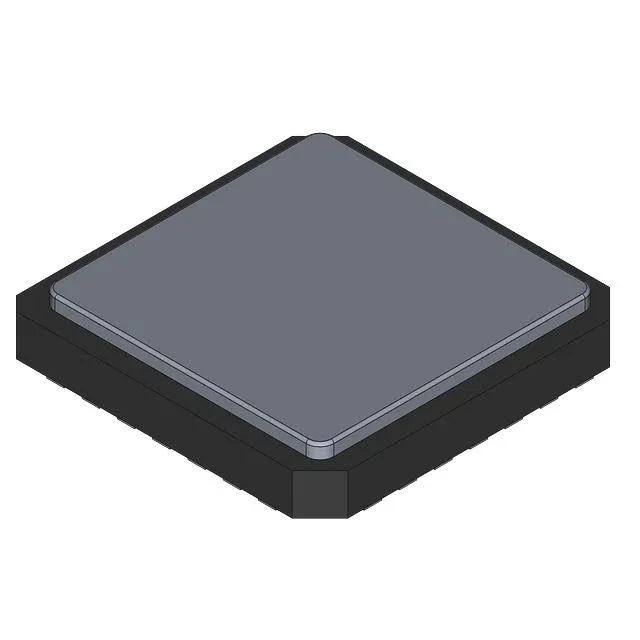
Low-power 8-bit AVR with 4KB Flash — what this part is for
The Microchip ATMEGA48V-10MMH is an 8-bit AVR microcontroller from the ATmega family, built for applications where low supply voltage and modest code space are the constraints. The 4 KB Flash program memory and 512 x 8 RAM limit firmware to straightforward control loops, I²C/SPI/UART protocol bridging, or basic PWM generation — think a thermostat, a fan controller, or a serial-to-I²C gateway. The 28-VFQFN package with exposed pad keeps the board footprint small and helps thermal management if the I/O pins are driving moderate loads.
10 MHz ceiling — why the 'V' matters
The 'V' in the order code signals the low-voltage variant: this part is characterised for full operation down to 1.8 V, but the price is a 10 MHz maximum clock. At 1.8 V the internal oscillator and Flash access are slower, so the part is rated at 10 MHz across the whole supply range. If your design needs more throughput — say 20 MHz — you would step to the standard-voltage ATMEGA48A or ATMEGA48P series, but those require at least 2.7 V. For a 3.3 V system with a 10 MHz bus, this part is a drop-in and saves a few microamps in sleep compared to the faster variants.
If you are planning a new design, the active status means you can commit the BOM line without worrying about near-term obsolescence.
Peripheral set and I/O — 23 pins, I²C/SPI/UART, 8-channel 10-bit ADC
The 28-VQFN package brings out 23 general-purpose I/O pins, enough for a small keypad, a few LEDs, and a serial interface. On-chip peripherals include I²C, SPI, and a UART/USART, plus an 8-channel 10-bit ADC for reading analog sensors or potentiometers.
Package and layout — 28-VFQFN exposed pad
The ATMEGA48V-10MMH comes in a 28-VFQFN with an exposed pad, supplier device package 28-VQFN (4x4). The 4x4 mm footprint is compact, but the fine pitch (0.5 mm) demands careful solder paste stencil design and a good reflow profile. No special bake is needed if the moisture barrier bag is intact; MSL is 3, so a bake at 125°C for 48 hours is required if the floor-life has been exceeded.