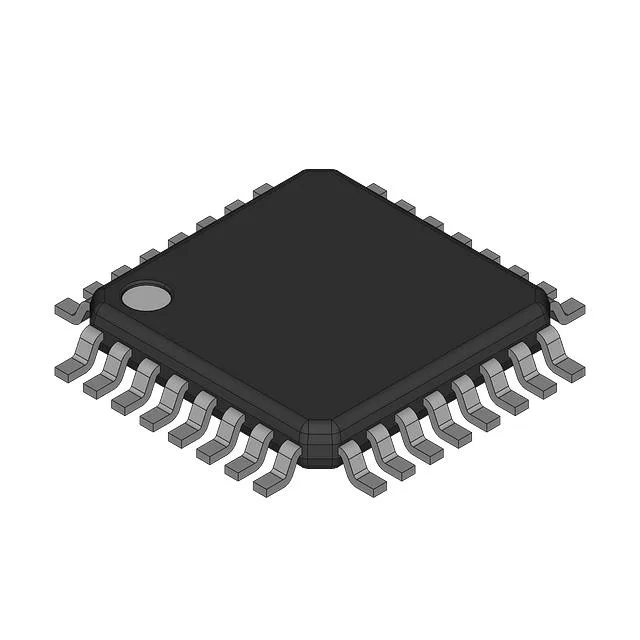
Microchip Technology ATMEGA16-16AQR — Microcontrollers & Processors (MCU / MPU / DSP)

ATMEGA16-16AQR AVR 8-bit MCU, 16 MHz, 16 KB Flash, 44-TQFP

MPNATMEGA16-16AQR
Active

Microchip AVR® ATmega series, ATMEGA16-16AQR, 8-bit MCU, 16 MHz, 16KB Flash, 1K x 8 SRAM, 512 x 8 EEPROM, 44-TQFP, -40°C to 105°C, 4.5V to 5.5V supply.

$4.6500Ref. price · indicative, final on quote
Packaging44-TQFP
SeriesAVR® ATmega
Independent supplier — new & surplus stockAuthenticity-screened · ESD-safe packingListing updated Jul 2026

Specifications

ATMEGA16-16AQR specifications
ParameterValue
SeriesAVR® ATmega
MountingSurface Mount
Oscillator typeInternal
Program memory typeFLASH
Voltage - supply (Vcc (Vdd))4.5V ~ 5.5V
Operating temperature-40°C~105°C(TA)
Speed16MHz
PackageTape & Reel (TR); Cut Tape (CT)
RAM size1K x 8
Core size8-Bit
EEPROM size512 x 8
PeripheralsBrown-out Detect/Reset, POR, PWM, WDT
ConnectivityI²C, SPI, UART/USART
Number of i (O)32
Core processorAVR
Case44-TQFP
Data convertersA/D 8x10b
Program memory size16KB (8K x 16)

Product details

16 MHz AVR core with 16 KB Flash — still a current-production workhorse

The Microchip ATMEGA16-16AQR is an 8-bit AVR microcontroller from the ATmega family, clocked at 16 MHz with 16 KB of Flash program memory, 1 KB SRAM, and 512 bytes of EEPROM.

Memory and peripheral fit for mid-range 8-bit designs

With 16 KB of Flash (8K x 16 words) and 1 KB SRAM, this part handles moderate firmware loads — think sensor polling loops, Modbus RTU slaves, or simple user interfaces — without needing external memory. The 512-byte EEPROM stores calibration constants or configuration data that survive power cycles.

Frequently asked questions

Does ATMEGA16-16AQR have an internal oscillator?

For precision timing — such as UART baud rates — an external crystal or resonator is still recommended.

Is ATMEGA16-16AQR the same as ATMEGA16-16AU?

The ATMEGA16-16AQR and ATMEGA16-16AU share the same die and 16 MHz rating, but the -AQR suffix indicates Tape & Reel packaging (suitable for automated pick-and-place), while the -AU suffix typically ships in trays. Electrically and functionally they are identical.