What the 20 ns speed and 10 macrocells mean for your glue logic
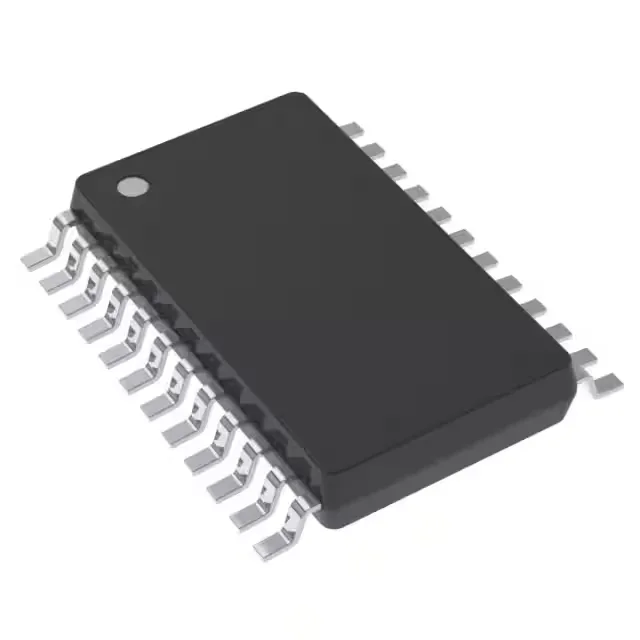
The Microchip ATF22V10CQZ-20XI is an electrically erasable PLD from the 22V10 family, delivering a 20 ns propagation delay across 10 macrocells. That 20 ns pin-to-pin speed sets the maximum system clock frequency — at 50 MHz you have zero timing margin, so this part fits best in 20–33 MHz bus interfaces or asynchronous decode logic where the combinatorial delay is the critical path. The 10 macrocells are individually configurable as registered or combinatorial outputs, each with programmable polarity. For a typical address decoder or state machine with 8–10 product terms per output, you get about 20–30 gate-equivalent logic density — enough to replace a handful of 7400-series DIPs on a single 24-TSSOP footprint.
Obsolete — the PCN reality and sourcing strategy
The last-time-buy window has closed — any stock in the channel is residual inventory or surplus from production overruns. Expect to pay a premium over the original list price — typical spot-market multiples run 2–5× for an obsolete 22V10 variant, depending on remaining inventory depth.
5 V supply and 24-TSSOP — board-level fit check
The part operates on a single 5 V supply — no on-chip regulator, no 3.3 V tolerance. If your system runs a lower core voltage, you will need external level shifters on the I/O lines. The 24-TSSOP package has a 0.65 mm lead pitch; a 4-layer PCB with a solid ground plane under the device is recommended to keep signal integrity clean at 20 ns edge rates. The 24-TSSOP body is 4.40 mm wide — rework with a hot-air station is straightforward if you preheat the board to 100–120 °C and use a fine-tip nozzle. No exposed pad, so no thermal-via requirement under the package.