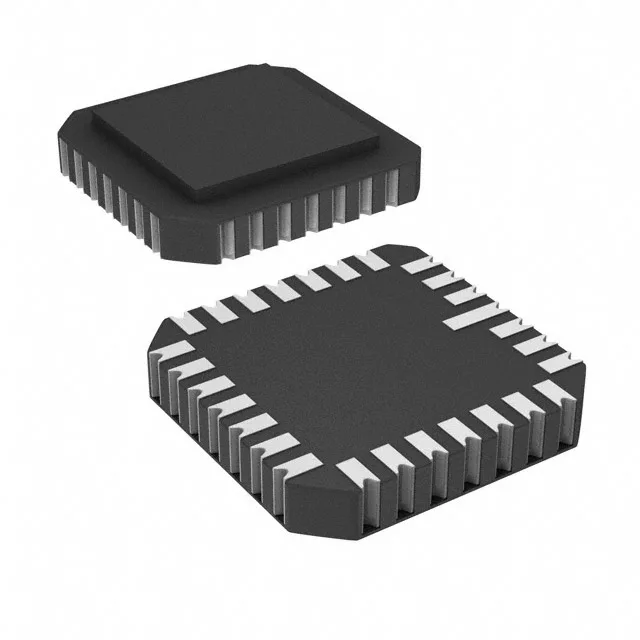
15 ns PLD in a hermetic ceramic LCC
The Microchip ATF22V10C-15NM/883 is an electrically erasable programmable logic device (EE PLD) from the 22V10 family, packing 10 macrocells with a propagation delay of 15 ns. It operates on a 5 V supply and comes in a 28-CLCC hermetic ceramic package — a footprint suited for high-reliability, military, and aerospace environments where plastic packages won't hold up under humidity or thermal cycling.
The 28-lead ceramic LCC (11.45x11.45 mm) is a surface-mount package with gold-plated pads on all four sides. It requires a reflow profile compatible with ceramic bodies — typically a slower ramp rate than plastic to avoid thermal shock to the die attach. The hermetic seal eliminates moisture ingress, so no bake-out is needed before reflow, even after long storage. This package is standard for MIL-STD-883 screened parts (the '/883' suffix indicates compliance with that test method). If you're replacing a plastic 28-PLCC version in an existing layout, verify the pad footprint — the ceramic LCC has a slightly different corner chamfer and pad geometry.
15 ns speed grade — timing budget
The 15 ns propagation delay (tpd) sets the maximum combinatorial path length at about 66 MHz for a single-gate feedback path. For registered logic, the internal flip-flop toggle rate will be higher, but the pin-to-pin delay through the sum-of-products array is the bottleneck for asynchronous inputs. Budget this into your worst-case timing analysis, especially across the full military temperature range where the delay may drift toward the datasheet maximum.