10 ns propagation delay — the timing budget anchor
The ATF22V10C-10PI is a 22V10-series electrically-erasable PLD from Microchip, rated at a 10 ns propagation delay from input to combinatorial output. That 10 ns window sets the maximum clock frequency for registered paths and the address-to-output latency in decode logic — every nanosecond of margin matters when the bus is shared with a fast SRAM or a DSP that expects a stable chip-select before the next clock edge.
10 macrocells, 5V supply — what the architecture delivers
Ten macrocells, each configurable as registered or combinatorial, give the designer 10 sum-of-product terms per output with programmable polarity. The 5V-only supply (Vcc = 5V nominal) means it drops into legacy 5V logic systems without a level translator — common in industrial I/O cards, memory address decoders, and glue logic on 5V backplanes. The EE cell technology allows in-system reprogramming through a standard PLD programmer; no UV erasure cycle needed.
24-DIP through-hole — legacy footprint, rework-friendly
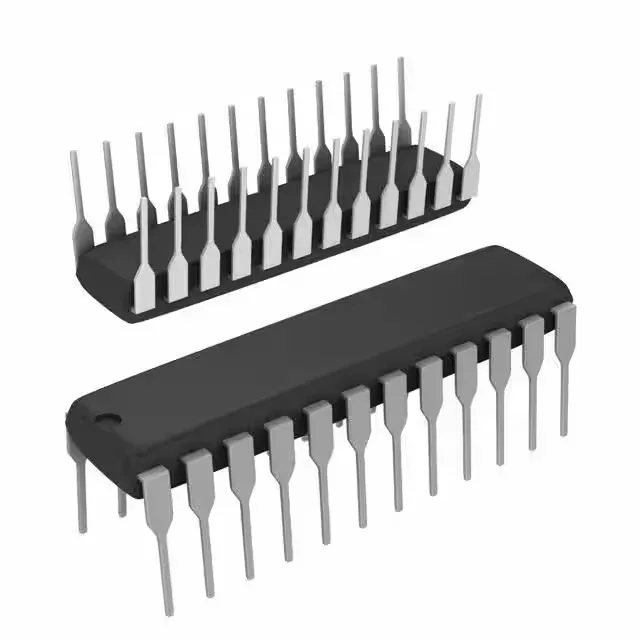
Housed in a 24-pin DIP with 0.300-inch body width, the ATF22V10C-10PI uses through-hole mounting. That footprint is a known quantity on older PCB designs.
Obsolete — sourcing strategy for sustainment programs
Microchip lists the ATF22V10C-10PI as obsolete. No LTB window remains; the channel is strictly new-old-stock and verified surplus.