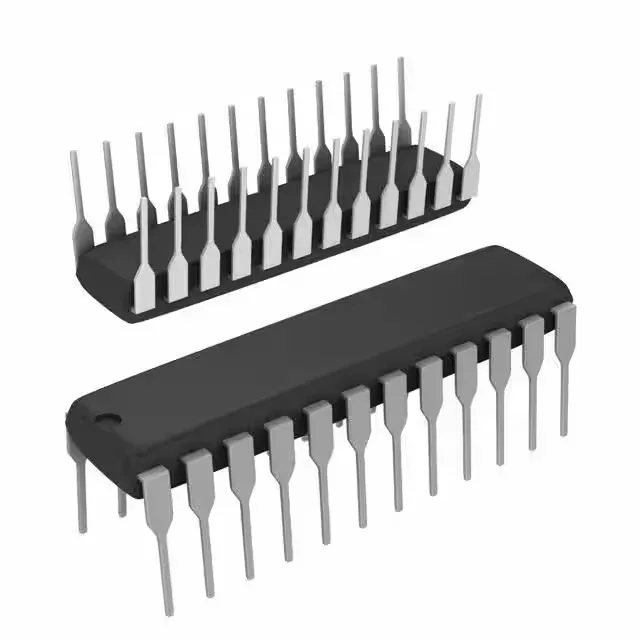
Microchip Technology ATF22V10C-10PC — FPGA / CPLD & Programmable Logic

ATF22V10C-10PC 22V10 EE PLD, 10 ns, 24-DIP, Obsolete

MPNATF22V10C-10PC
Obsolete

Microchip ATF22V10C-10PC, 22V10 EE PLD, 10 ns speed, 10 macrocells, 5 V input, Through Hole, 24-DIP (0.300", 7.62mm), 24-PDIP, Tube.

Independent supplier — new & surplus stockAuthenticity-screened · ESD-safe packingListing updated Jul 2026

Specifications

ATF22V10C-10PC specifications
ParameterValue
Series22V10
MountingThrough Hole
Programmable typeEE PLD
Voltage - input5V
Speed10 ns
PackageTube
Case24-DIP (0.300\", 7.62mm)
Number of macrocells10

Product details

10 ns propagation delay — the timing ceiling

The ATF22V10C-10PC is a 22V10 electrically erasable programmable logic device from Microchip, with a 10 ns propagation delay. The 10 macrocells are configurable as registered or combinatorial outputs, each with programmable output polarity. The 5 V supply is fixed — this is a legacy 5 V-only PLD family.

24-DIP package — through-hole legacy footprint

The 24-DIP (0.300", 7.62mm) through-hole package, also specified as 24-PDIP, is a legacy footprint that mates with standard 24-pin DIP sockets or solders directly into plated through-holes on a 0.100-inch pitch grid. The 0.300-inch row spacing is narrower than the 0.600-inch wide DIP — confirm the socket or PCB layout matches this dimension before ordering.

Microchip lists the ATF22V10C-10PC as obsolete.

Frequently asked questions

What is the speed of the ATF22V10C-10PC?

The ATF22V10C-10PC has a 10 ns propagation delay (tPD). This is the time from input to valid output for a combinatorial path; for registered logic, the maximum clock frequency is limited by this delay plus the register setup time.

What package does the ATF22V10C-10PC come in?

The ATF22V10C-10PC is supplied in a 24-DIP (0.300", 7.62mm) through-hole package, also designated as 24-PDIP. The row spacing is 0.300 inches — narrower than the 0.600-inch wide DIP.

Is the ATF22V10C-10PC a 5 V part?

Yes, the ATF22V10C-10PC operates on a 5 V input supply. It is a fixed 5 V-only device, not compatible with 3.3 V or mixed-voltage logic families.