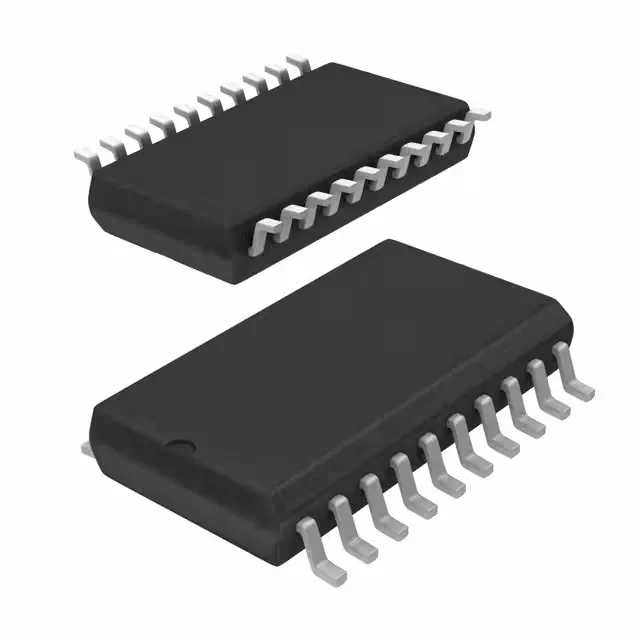
15 ns EE PLD — obsolete, but still on the BOM
The Microchip ATF16V8CZ-15SC is an electrically erasable programmable logic device (EE PLD) from the 16V8 family, offering 8 macrocells and a 15 ns propagation delay.
15 ns — what it buys on the bus
The 15 ns propagation delay sets the maximum combinatorial logic depth between clock edges. At a 33 MHz system clock (30 ns period), the 15 ns path leaves roughly 15 ns for clock-to-output and setup times — adequate for a single level of PAL-style logic, but tight for cascaded macrocells. For a 50 MHz clock (20 ns period), a single 15 ns path consumes 75% of the cycle budget, leaving little margin for board-level skew.
8 macrocells — glue logic sweet spot
Eight macrocells translate to roughly 8 to 16 registered or combinatorial logic equations, depending on the output polarity and register configuration. This density covers address decoding, bus arbitration, simple state machines, and control signal generation for an 8-bit or 16-bit microcontroller system.
Availability is limited to surplus and broker-channel inventory.
5V-only supply — check your I/O domain
This part is strictly 5V on all I/O and supply rails. It is not 3.3V tolerant on inputs, and its outputs swing rail-to-rail. Interfacing with a 3.3V FPGA or MCU requires external level translation or an open-drain configuration with pull-ups to the lower rail. The 5V-only constraint also rules out direct connection to 1.8V or 2.5V logic families without a translator.
20-SOIC wide — footprint and reflow
The 20-SOIC package with 7.50 mm body width (0.295-inch) uses a 1.27 mm pitch. The wide body provides better thermal dissipation than the narrow SOIC variant, though the 5V supply at moderate toggle rates rarely pushes the junction temperature. Standard lead-free reflow profiles for SOIC apply; MSL is typically Level 3 or better for this family, but verify per date code.