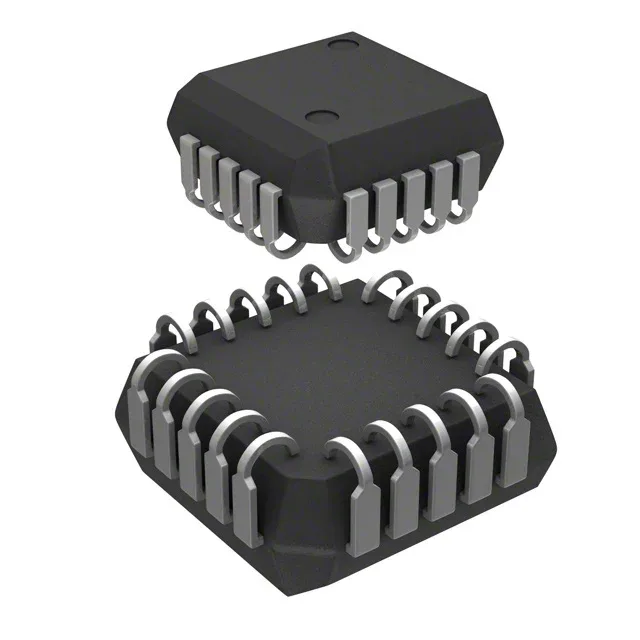
5 ns propagation delay — what it buys you
The ATF16V8C-5JC is a 5 ns EE PLD from Microchip's 16V8 family, offering 8 macrocells in a 20-PLCC package. The 5 ns pin-to-pin propagation delay means it can handle address decoding or state-machine logic at clock rates up to about 200 MHz without adding wait states — a fit for fast SRAM or processor bus interfaces where every nanosecond of decode latency eats into setup margin.
Obsolete — planning the replacement path
Microchip lists the ATF16V8C-5JC as obsolete. For sustainment of existing boards, the surplus and broker channel is the only supply route — expect to qualify parts against date code and handling history. For new designs, the 16V8 family has been superseded by a pin-compatible series offering similar speed grades; confirm the exact speed bin and programming algorithm compatibility before substituting.
20-PLCC footprint and rework notes
The 20-PLCC (J-Lead) package measures 9x9 mm and requires a soldering profile with a peak temperature around 245 °C for lead-free assemblies. The J-lead form factor is less tolerant of board flex than gull-wing leads; ensure the PCB pad geometry matches the PLCC-20 land pattern with a 0.050-inch pitch. A hot-air rework station with a PLCC nozzle is the standard removal tool — avoid prying the body off, which lifts pads.
5V supply rail and I/O compatibility
The device operates from a 5V supply. All I/O pins are 5V-tolerant, but the outputs swing rail-to-rail. When interfacing with 3.3V logic, a series resistor or level shifter is needed on the output side to avoid overvoltage on the downstream input. The 5V rail also sets the programming voltage — most universal programmers handle the ATF16V8C with a 5V Vcc algorithm.