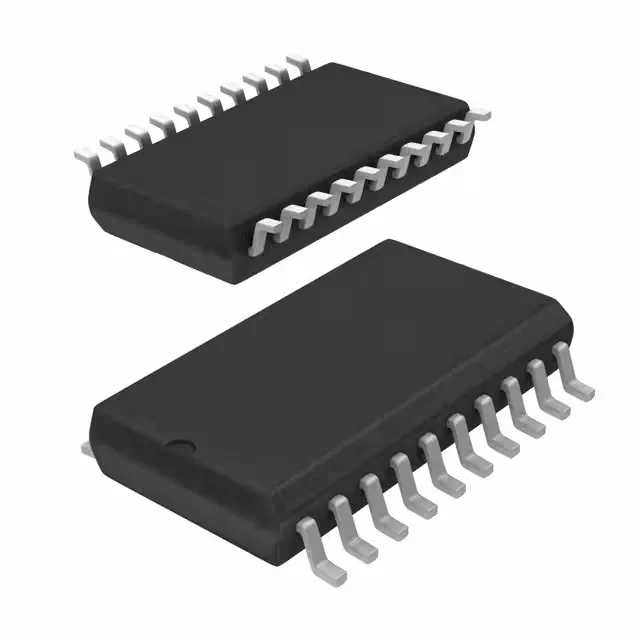
The Microchip ATF16V8B-15SI is a 16V8-series electrically erasable programmable logic device (EE PLD) with 8 macrocells and a 15 ns propagation delay, running on a 5V supply rail. It is a surface-mount part in a 20-SOIC wide-body package (0.295-inch, 7.50 mm width). This class of SPLD is used for board-level address decoding, state machines, and bus-interface glue logic in legacy 5V systems — think industrial controllers, telecom line cards, and test equipment that still run on a 5V plane.
The 15 ns propagation delay (tPD) sets the combinatorial path limit: a signal through the PLD adds 15 ns of latency. In a 5V system running a 33 MHz bus clock (30 ns period), that leaves 15 ns for setup-and-hold margin on the downstream latch — tight but workable for a single-level decode. If the design needs back-to-back registered operations, the 15 ns speed also determines the maximum registered clock frequency the part can sustain.
8 macrocells — sizing the logic budget
Eight macrocells, each configurable as registered or combinatorial output, give roughly 8 to 16 product terms per output depending on the fuse map. That is enough for a 3-to-8 address decoder, a simple 4-bit state machine, or a handful of bus transceiver control signals. If the logic equations exceed the macrocell product-term limit, the design must cascade through multiple passes — which adds delay and eats into the 15 ns budget.
For existing BOM lines, procurement must source through the surplus and broker channel — sealed factory reels with consistent date-codes are the preferred grade.
Package note — the 20-SOIC wide body
The 20-SOIC package here has a 0.295-inch (7.50 mm) body width — wider than the standard 0.300-inch SOIC-20 footprint. Confirm the footprint against the package drawing before committing the board.