What the 10 ns speed grade means for your timing budget
The ATF16V8B-10JC is an electrically erasable programmable logic device (EE PLD) from Microchip's 16V8 family, offering a 10 ns propagation delay from input to registered output. That 10 ns is the pin-to-pin speed through the combinatorial path — it sets the maximum clock frequency and the margin for address decoding or state-machine logic in a 5V system. For a legacy board running at 50 MHz, the 10 ns part leaves 10 ns of setup time after the clock edge; a slower 15 ns grade would eat into that margin and risk timing violations.
8 macrocells and 5V supply — what fits
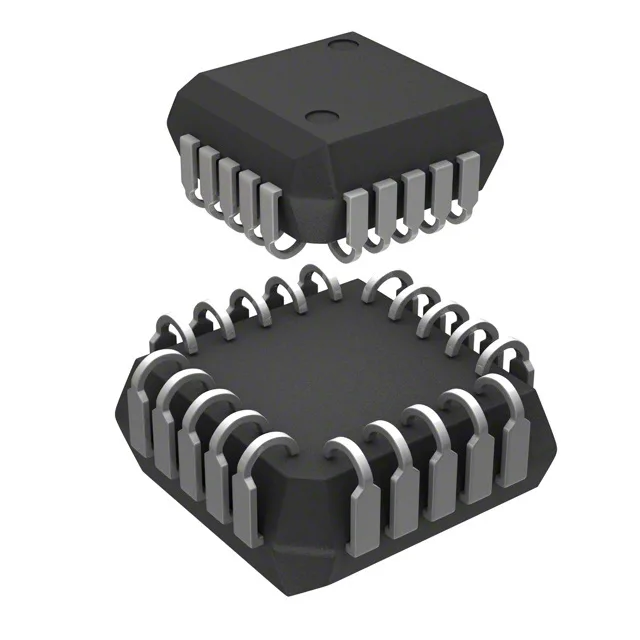
Eight macrocells, each configurable as registered or combinatorial output, give this PLD roughly 150 to 200 gate-equivalent logic. It runs on a single 5V rail, no core or I/O split — the same supply as the 74-series logic it often replaces. The 20-PLCC J-Lead package (9x9 mm body) is a surface-mount footprint that solders directly to the board; the J-bend leads save board area compared to a DIP but require a reflow profile compatible with PLCC land patterns.
Microchip lists the ATF16V8B-10JC as obsolete.