AT89C51CC01UAT-RLTUM
Microchip Technology · AT89C CAN Series
IC MCU 8BIT 32KB FLASH 44VQFP
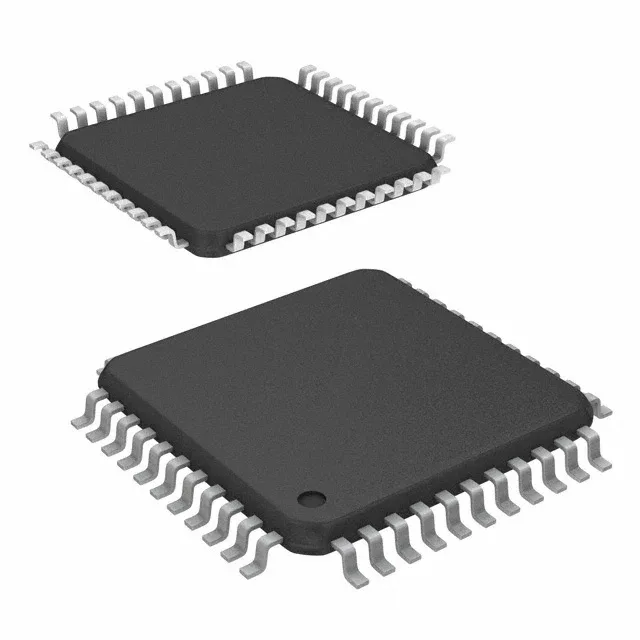
MOQ 1 · Tray · RoHS · EIA-481 · DAP/DDP · T/T
Technical specifications
| Parameter / Attribute | Specification / Value |
|---|---|
| Series | AT89C CAN |
| Mounting | Surface Mount |
| Oscillator type | External |
| Program memory type | FLASH |
| Voltage - supply (Vcc (Vdd)) | 3V ~ 5.5V |
| Operating temperature | -40°C ~ 85°C (TA) |
| Speed | 40MHz |
| Package | Tray |
| RAM size | 1.25K x 8 |
| Core size | 8-Bit |
| EEPROM size | 2K x 8 |
| Peripherals | POR, PWM, WDT |
| Connectivity | CANbus, UART/USART |
| Number of i (O) | 34 |
| Core processor | 80C51 |
| Case | 44-LQFP |
| Data converters | A/D 8x10b |
| Program memory size | 32KB (32K x 8) |
Need Stock or a Drop-in Second-Source for AT89C51CC01UAT-RLTUM?
Package: PDIP-40 / TQFP-44 / PLCC-44 · Pin-compatible replacements with immediate Shenzhen spot stock
The AT89S52 is the 8051 that refused to die: the same 40-pin DIP body and instruction set as the industry-standard AT89C52, with the one repair-relevant difference in the name - the S means SPI in-system programming at 5V, where the C-generation needed a 12V parallel programmer that has since vanished from most benches. The C parts are EOL; the S52 is the drop-in that replaced them; and the Chinese STC89C52RC line goes further - pin-for-pin and code-compatible, with more RAM, built-in EEPROM and UART downloading over a plain serial converter. This socket is a three-generation ladder where everything fits and the tools differ, which is exactly what confuses repairs.
Verified Pin-Compatible Replacements (3 verified alternatives)
The Cheaper Living Descendant
Shenzhen Spot Stock (24-48h Dispatch)
The same 8051 core and pinout with a richer house: 512 bytes of RAM against 256, about 2K bytes of on-chip EEPROM, an extra timer, a spare port - and program download over a plain UART with a USB-TTL converter, no programmer at all.
Wide 8051-class envelope; the peripheral additions do not change the socket.
The Ancestor It Replaced
Shenzhen Spot Stock (24-48h Dispatch)
The original 40-pin classic: same core, same code space discipline, same socket - programmed through the 12V parallel protocol and carrying none of the S-generation additions (no ISP, no watchdog, no dual data pointer).
Narrower window than the S part (about 4.8V to 5.3V against 4.0V to 5.5V): fitting a C part into an S design must respect the older, tighter supply limits.
The 4K Member of the Same Socket
Shenzhen Spot Stock (24-48h Dispatch)
The same silicon culture at half the program memory (4K flash against 8K): the member to fit when the hex file provably lives under the smaller ceiling - and to avoid when it does not.
Identical S-generation supply and ISP behavior.
Buyer & Quality Checklist for Sourcing Alternatives
- The letter is the programming story: AT89C52 needs a 12V parallel programmer (EOL generation), AT89S52 programs over 5V SPI in system (USBasp class), STC89C52RC downloads over plain UART - three tools for one socket. "The chip will not program" is almost always a tool-generation mismatch.
- C to S is the free direction: same core, same code, same 40 pins, plus ISP, watchdog, dual data pointer and wider supply. The reverse direction fits but re-imposes the parallel programmer on the next update - plan the flashing before the fitting.
- STC code portability runs one way: AT89 programs run on the STC silently; programs using STC-only peripherals do not run back on Atmel silicon. Label the firmware source per board when repairs mingle parts.
- Supply windows differ across the generations (about 4.8-5.3V on the C52 class against 4.0-5.5V on the S): dropping an older part into a modern design is where the tighter old limit applies.
- The ISP header wiring is part of the repair: S52 programming uses the SPI pins at 5V - a header built for an STC (UART) will not talk to it, and the reverse holds. Match the header to the chip in the socket, not the silkscreen anecdote.
- This segment of the market carries refurbished and re-marked chips: date codes, packaging photos and a program-and-verify step on receipt are the discipline for both the EOL C parts and the volume STC line.
Frequently Asked Technical Questions
Q: Can an AT89S52 replace an AT89C52?
A: Yes - same 40-pin DIP, same instruction set and code space, and the S52 adds 5V SPI in-system programming where the C52 required a 12V parallel programmer. The C series is EOL; the S52 is the standard drop-in for those sockets.
Q: What is the difference between AT89S52 and STC89C52RC?
A: Both are pin-for-pin and run the same 8051 code; the STC adds RAM (512 bytes), on-chip EEPROM, extra timers and a spare port, and downloads over a plain UART with a level converter instead of an SPI programmer. STC-only code does not port back to the Atmel part.
Q: Why will my programmer not talk to the chip in the socket?
A: Three generations, three tools: AT89S52 wants USBasp-class SPI at 5V, AT89C52 needs the old 12V parallel protocol, STC89C52 responds to UART download with STC-ISP. Identify the die first, then use its tool - the socket tells you nothing.