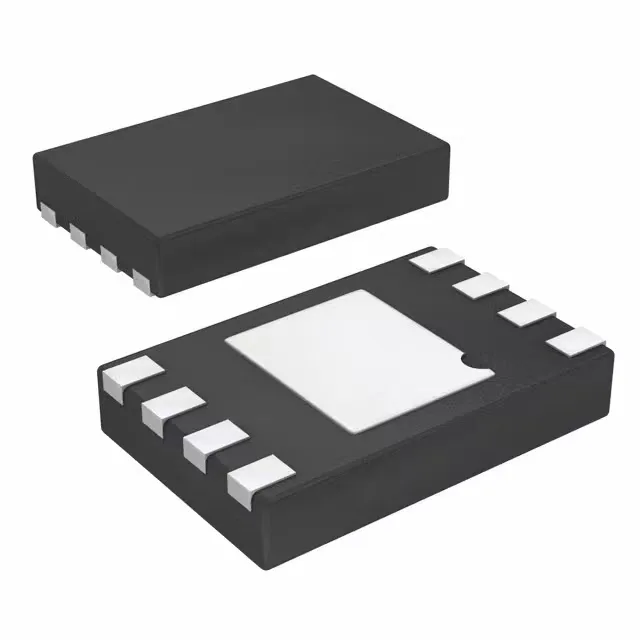
The AT30TS75A-MA8M-T: RoHS3 compliant per the manufacturer listing, which covers the EU RoHS directive without exemptions.
The sensing range matches the operating temperature — the die itself measures from -55°C to 125°C local. This suits engine-bay electronics, cold-chain loggers, and outdoor telecom enclosures where the ambient can swing from a Siberian winter to a roof-deck summer. The tighter grade applies in the normal operating window for most systems; the looser spec at the extremes is still within the tolerance for overtemperature protection or environmental monitoring.
Interface, resolution, and feature set
Digital output via I²C/SMBus — the sensor appears as a slave on the two-wire bus, compatible with standard 100 kHz and 400 kHz I²C clock rates as well as SMBus timeout protocols. The 11-bit resolution gives a nominal 0.0625°C per LSB, which is adequate for thermal management loops and data logging without oversampling. Built-in features include programmable limit registers (for overtemperature alarm), programmable resolution (trade speed for noise), a one-shot conversion mode (wake-measure-sleep for battery-powered nodes), and a shutdown mode that drops quiescent current to near-zero between reads. The output switch pin can be configured as an alert or a thermostat-style interrupt.
Housed in an 8-UFDFN with exposed pad (supplier package 8-UDFN 2×3 mm). The 0.50 mm pitch demands a standard NSMD land pattern; a 4-layer board with thermal vias under the pad pulls heat away from the die when measuring a hot PCB. The TR option is the standard reel for pick-and-place; CT is for prototype or low-volume builds where a full reel is not justified.