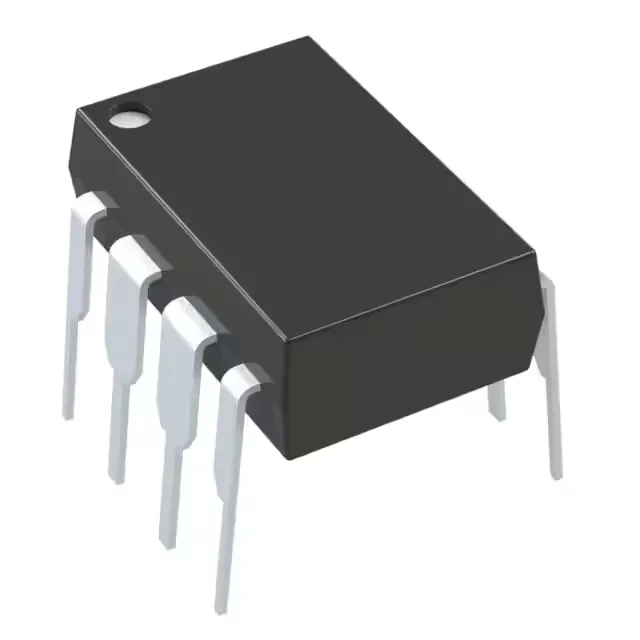
64 Kbit SPI EEPROM in a through-hole DIP — what you get
It clocks up to 10 MHz and operates from 1.8V to 5.5V, making it usable across 3.3V and 5V logic domains without a level shifter. The 8-PDIP package suits through-hole prototyping, legacy board repairs, or designs where socketed firmware storage is preferred.
10 MHz SPI — bus timing headroom
The 10 MHz SPI clock lets the host controller read or write the full 64 Kbit array in under 7 ms at maximum speed. For comparison, the older 25LC640-I/P sibling tops out at 2 MHz — the 25AA640A-I/P gives five times the throughput for firmware updates or high-speed parameter logging. The write cycle time per page is 5 ms, so burst writes still need a polling or interrupt-driven wait loop.
The wide supply range covers 1.8V low-power MCUs, 3.3V mainstream controllers, and legacy 5V buses. No external regulator is needed when the EEPROM shares a rail with the host. At 1.8V the SPI clock still hits 10 MHz, which is rare for a serial EEPROM — most 1.8V parts derate to 5 MHz or less. This part keeps the full speed across the entire voltage range.
Microchip has not issued an EOL notice or last-time-buy window for this order code.