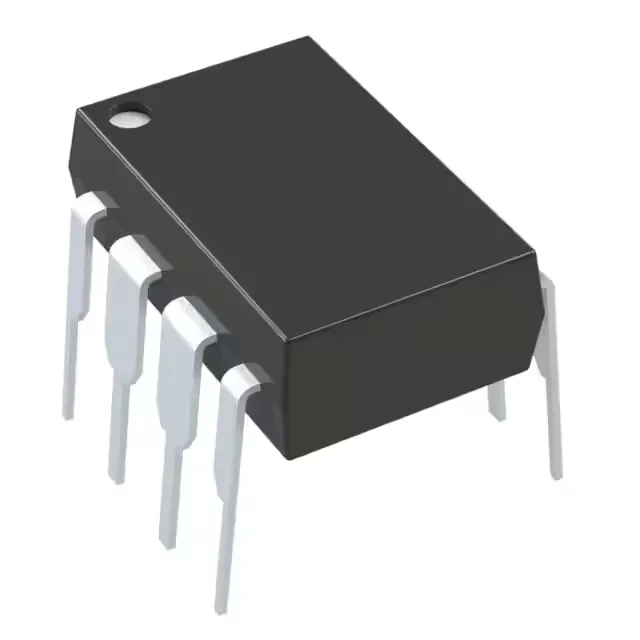
The Microchip 24LC02B-E/P is a 2Kbit serial EEPROM with an I²C interface, organized as 256 x 8 bits.
900 ns access time and the I²C bus budget
At a 400 kHz bus clock, the bit period is 2.5 µs, so 900 ns leaves comfortably over half a bit period for the slave to gate data onto the bus.
5 ms write cycle — planning the firmware loop
A page or byte write takes 5 ms (the write cycle time), during which the device ignores further I²C commands. The host firmware must either poll the acknowledge polling sequence or insert a 5 ms delay before the next write. If the system writes configuration data on every power-up, that 5 ms window adds to the boot time budget. For a LoRa end-node waking from deep sleep, a 5 ms write lockout is acceptable — the wake-up energy spent transmitting a packet dwarfs the EEPROM write energy.
New designs can commit this part without an obsolescence watch.
Through-hole package — board fit and handling
The 8-DIP (0.300" row spacing) package fits standard 0.1" pitch prototyping boards and sockets. It is not a moisture-sensitive device — no bake required before hand-soldering or wave-solder. The PDIP body stands up to repeated soldering cycles, so it is a good choice for rework-lab test jigs or field-upgrade boards where the EEPROM may be socketed. Keep the leads clean; the tin-plated copper leads solder readily with a 350°C iron in 2–3 seconds per pin.