Zener voltage and power rating
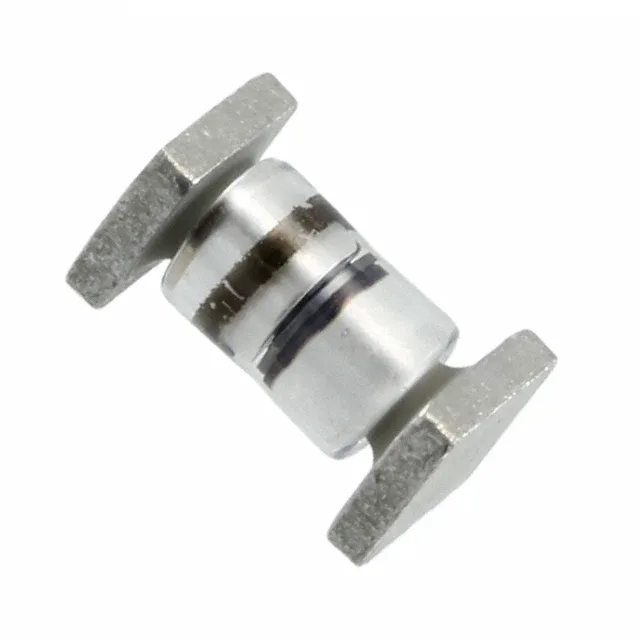
The 1N6490US/TR is a 5.1 V Zener diode in a surface-mount SQ-MELF package (D-5A), rated for 1.5 W continuous power dissipation. The ±5% tolerance on the nominal voltage means the actual Zener voltage sits between 4.845 V and 5.355 V — tight enough for most 5 V rail clamping or reference applications, but not a precision bandgap reference. The 1.5 W power rating is specified at the maximum operating temperature of 175°C, so derating is needed when the ambient temperature exceeds 25°C — the junction-to-ambient thermal resistance of the SQ-MELF package governs how much current the diode can sink without exceeding the junction temperature limit.
Operating from -65°C to 175°C, this Zener covers military and industrial temperature extremes — suitable for avionics, downhole tools, or engine-bay electronics where the ambient can swing beyond the commercial range. The SQ-MELF (D-5A) package is a hermetic glass-sealed surface-mount body, offering better moisture resistance and thermal cycling endurance than plastic SMD packages. The Tape & Reel (TR) packaging option suits automated pick-and-place assembly. The D-5A footprint is non-standard compared to SOD-123 or SOT-23, so verify the land pattern in the assembly drawing before committing the PCB layout.
Leakage and forward characteristics
Reverse leakage is 1 µA maximum at 1 V reverse voltage — low enough that it won't load a high-impedance bias network. The forward voltage is 1.5 V maximum at 1 A forward current, typical for a Zener diode operating in the forward conduction region. Maximum Zener impedance (Zzt) is 7 Ohms at the test current — this dynamic resistance affects the voltage regulation under varying load current. A 7 Ohm Zzt at 5.1 V means a 10 mA change in current shifts the output voltage by roughly 70 mV, which is acceptable for general-purpose clamping but not for a precision shunt regulator.