500W peak pulse power — the surge capacity that protects the rail
That surge capacity is what keeps a 48V or 52V DC bus from exceeding the downstream regulator's absolute maximum input during a load-dump or lightning-coupled transient.
Clamping voltage and standoff — the two numbers that set the protection window
Reverse standoff voltage is 51.6V typical — the part will not conduct appreciable leakage below that rail voltage. When a transient exceeds breakdown (54V min), the diode clamps at 78.5V max. That clamp ceiling is the voltage the protected circuit must survive; a 60V-rated MOSFET on the rail would need a derating check.
SQ-MELF package — hermetic body for harsh mounting
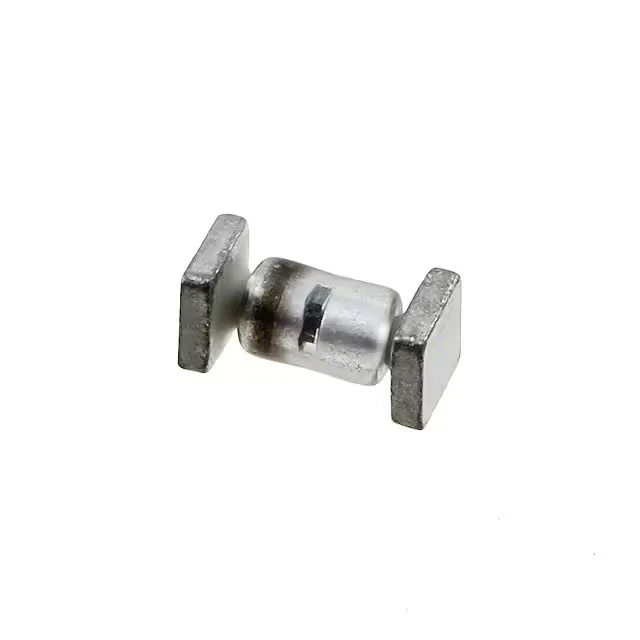
The SQ-MELF (B case) is a surface-mount package with a cylindrical ceramic body and metallised end caps. It is hermetic by design, which matters for high-reliability applications where moisture ingress into a plastic package would be unacceptable. The mounting footprint differs from a standard SOD-123 or SMB — the MELF end-cap solder joint is sensitive to tombstoning if the pad geometry and reflow profile are not matched to the cylindrical shape.
The base product number is 1N6468, and the US suffix indicates the SQ-MELF package variant.