1500W bidirectional TVS in a DO-13 can
The 1N6066A/TR: The single bidirectional channel protects against both positive and negative transients, making it suitable for AC power lines, bipolar DC rails, or signal lines where polarity is not fixed.
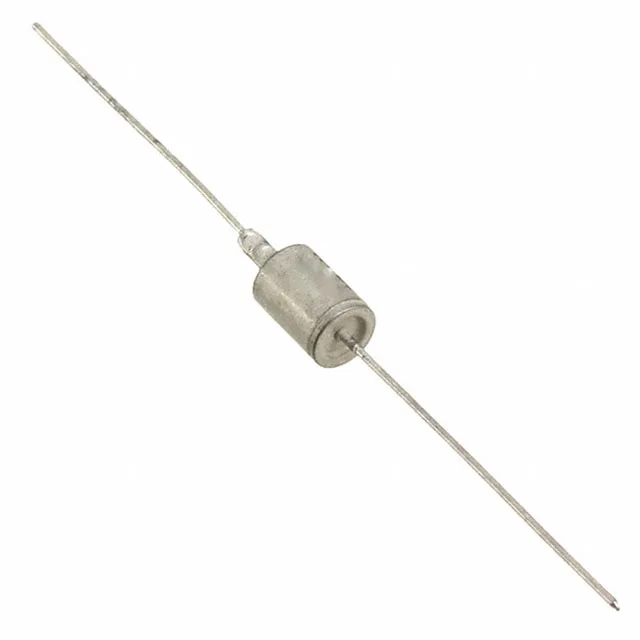
Microchip Technology 1N6066A/TR, Zener TVS diode, bidirectional, 1500W peak pulse power, 124V minimum breakdown voltage, DO-13 through-hole package, Tape & Reel
| Parameter | Value |
|---|---|
| Type | Zener |
| Mounting | Through Hole |
| Voltage - breakdown | 124V |
| Voltage - clamping (Max) @ ipp | 182V |
| Voltage - reverse standoff | 110V |
| Current - peak pulse (10/1000μs) | 8.2A |
| Power - peak pulse | 1500W (1.5kW) |
| Power line protection | No |
| Operating temperature | -55°C ~ 175°C (TJ) |
| Package | Tape & Reel (TR) |
| Applications | General Purpose |
| Case | DO-13 |
| Bidirectional channels | 1 |
The 1N6066A/TR: The single bidirectional channel protects against both positive and negative transients, making it suitable for AC power lines, bipolar DC rails, or signal lines where polarity is not fixed.
Yes, it is a single bidirectional channel, clamping both positive and negative transients symmetrically. This is ideal for AC-coupled lines or bipolar supplies where polarity reversal is possible.