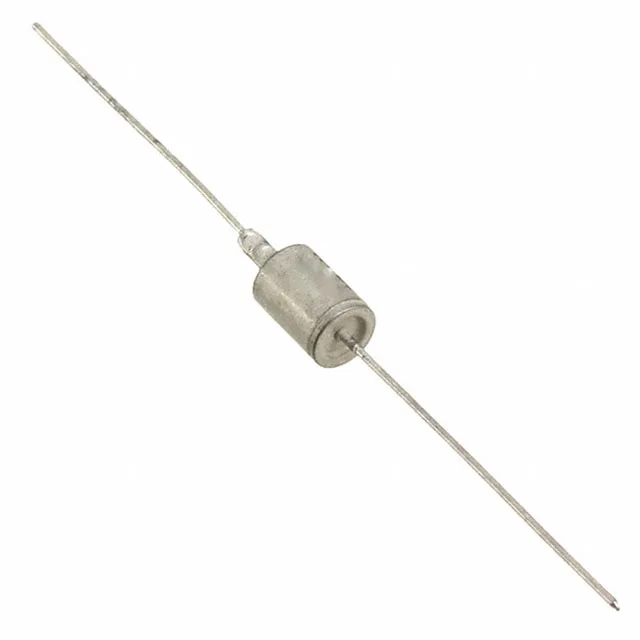
The 1N6056/TR: The minimum breakdown voltage is 45.9V, with a typical reverse standoff of 41V and a clamping ceiling of 73.5V at the peak pulse current of 20.4A (10/1000µs waveform). This means a 41V rail sees the diode start conducting just above normal operating voltage, clamping transients before they reach the downstream silicon — the 1500W peak pulse rating gives you the energy headroom for a single severe surge. At the high end, the leakage current through the Zener junction rises — budget for that in the standby power calculation if the rail sits near 41V continuously.
DO-13 package — footprint and mounting check
The DO-13 is a through-hole axial-lead package with a metal stud cathode tab. The board footprint needs a drilled hole for the leads and a copper pad area under the tab for heatsinking — the thermal resistance junction-to-ambient depends heavily on that pad size and the copper weight. No exposed paddle; the tab is the cathode and must be soldered or clamped for thermal transfer. Single bidirectional channel configuration — the device clamps both polarities equally, so no orientation concern for AC or bipolar transient lines.