Zener voltage and power — the two numbers that decide the slot
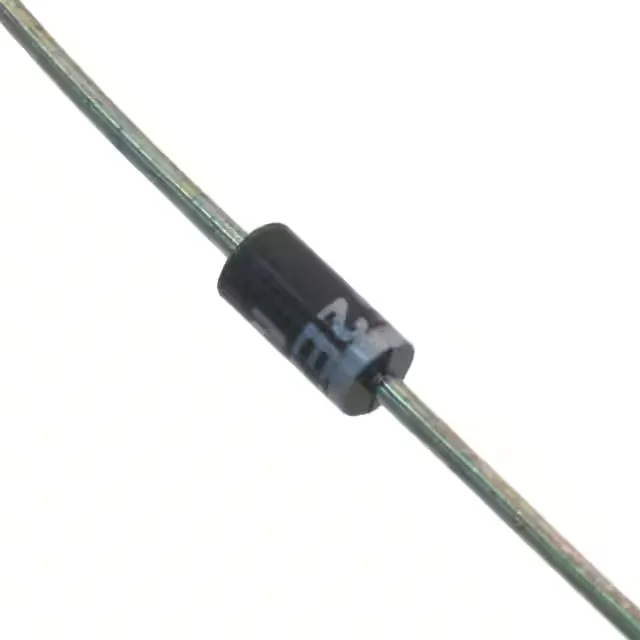
The 1N4742P/TR12 is a 12 V Zener diode rated at 1 W maximum power dissipation in the standard DO-204AL (DO-41) axial-lead package from Microchip Technology. The 12 V nominal breakdown voltage, held within ±10%, sets the regulation point for shunt-clamp or reference circuits — a 12 V rail that needs to stay between 10.8 V and 13.2 V across the load range uses this part. With a 9 Ohm maximum Zzt impedance, the regulation voltage shifts about 9 mV per mA of Zener current change — significant if the load current varies widely, but fine for fixed-load or low-dynamic applications.
Thermal and package — what the rework bench needs to know
The DO-41 axial package is through-hole, which means it survives hot-air removal and hand-soldering without the risk of lifting a pad — a rework-friendly part. At 1 W maximum dissipation, the junction-to-ambient thermal resistance in free air is roughly 50-70 °C/W for a DO-41 with 0.4-inch lead length — so at 1 W the junction sits about 50-70 °C above ambient. Keep the leads short and the PCB copper area generous if running near the power limit. Tape & Reel packaging (the /TR suffix) means the part ships on a reel for automated insertion, but the through-hole axial body is equally happy in hand-assembly or repair work — the reel just saves pick-and-place setup time.
Leakage and forward drop — the secondary specs that matter in bias circuits
Reverse leakage is a maximum 5 µA at 9.1 V reverse voltage — well below the Zener knee, so standby power loss in a 12 V rail is negligible (about 45 µW per diode). This matters in battery-powered circuits where every microamp counts. Forward voltage drop is 1.2 V maximum at 200 mA forward current — the diode can be pressed into service as a general-purpose rectifier in a pinch, though the 1 W power limit restricts continuous forward current to about 800 mA peak.