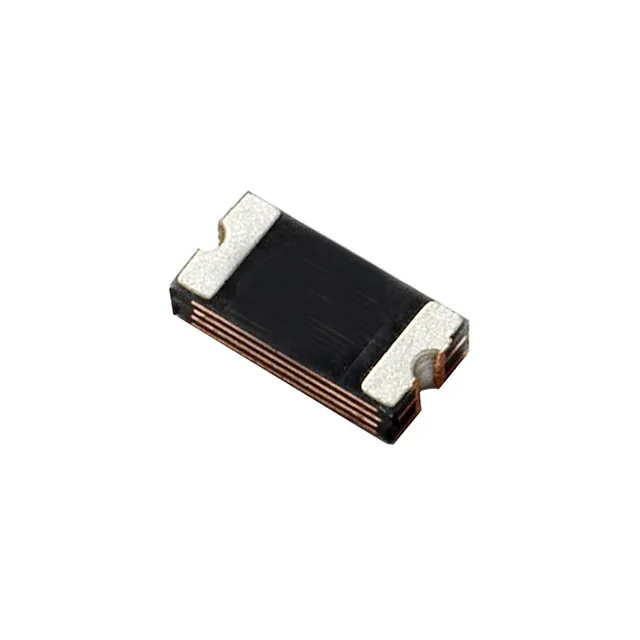
Active production — what the hold current means for your BOM
The 1206L020/30YR: Its 200 mA hold current (Ih) is the maximum steady-state current the device can carry without tripping at 25 °C ambient — above this threshold the internal polymer heats and switches to a high-resistance state, protecting the downstream circuit. The trip current (It) is 420 mA minimum, meaning the fuse is guaranteed to transition within 100 ms when the fault current reaches that level, limiting the energy let-through to the load.
Voltage and fault-current ceiling
Rated for a maximum voltage of 30 V and a maximum fault current of 100 A, this PTC can safely interrupt short circuits on low-voltage DC rails up to those limits without rupturing or arcing. Initial resistance (Ri) is 650 mOhms minimum, rising to 2.6 Ohms maximum after tripping (R1) — this post-trip resistance is the series impedance the circuit sees until the device cools and resets, which can take seconds to minutes depending on ambient temperature and current.
Temperature range and agency approvals
Safety certifications include cURus and TUV, qualifying the fuse for North American and European equipment approvals without additional component-level testing.