What 1500W peak pulse power means on a 400V rail
The 1.5SMC400A: That 1.5kW rating tells you how much transient energy it can shunt before the junction gives up — on a 342V DC bus, a 2.8A peak pulse current gets clamped to 548V, which is the voltage the downstream silicon sees.
Breakdown and standoff — the two numbers that decide fit
Reverse standoff is 342V typ — this is the continuous DC voltage the diode blocks without conducting. The breakdown voltage (380V min) is where it starts to avalanche. The gap between 342V and 380V is the margin for normal rail ripple and tolerance; if your 400V bus sags below 342V in normal operation, this part will not hold off. Clamping voltage at 548V max (at Ipp=2.8A) is the ceiling the protected circuit sees during a surge. A downstream MOSFET rated at 600V Vds has 52V of headroom above the clamp — comfortable for most industrial 400V rails.
Package and board-fit for the bench
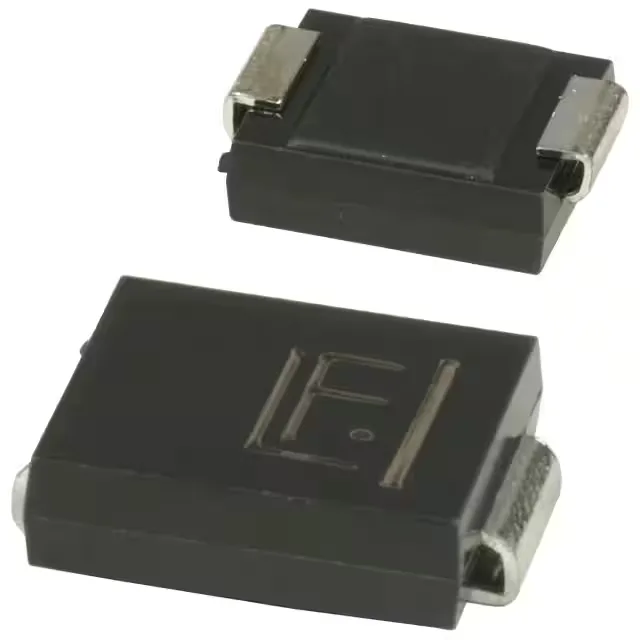
DO-214AB (SMC) surface-mount package, also known as SMCJ. Power line protection is flagged as 'No' — this is not a bidirectional TVS for AC mains; it is a unidirectional clamp for DC rails where polarity is fixed.