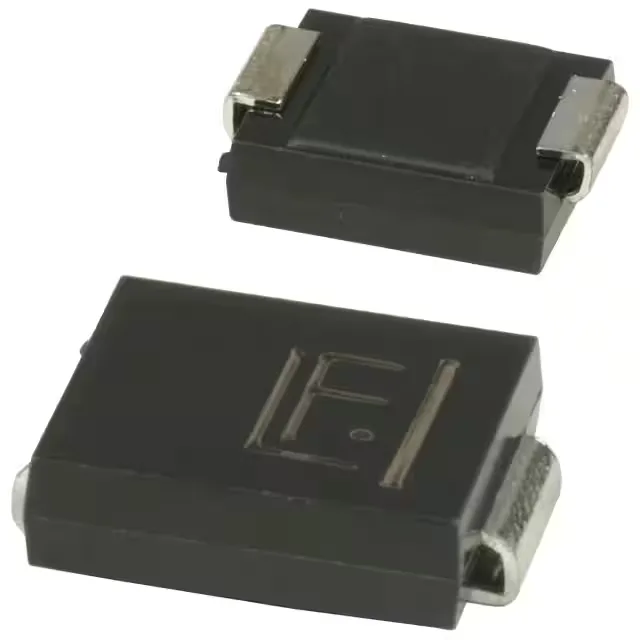
TVS diode for 17.1 V rail protection
The 1.5SMC20CA: The bidirectional configuration means a single device protects both polarities on a signal or power line, simplifying BOM layout for AC-coupled or bipolar circuits.
Clamping voltage and peak current: what they mean for your rail
The 27.7 V clamping voltage at 54.9 A is the maximum voltage the TVS lets through during a surge. For a 17.1 V rail, this clamp margin of about 10 V above the operating voltage means the downstream components must withstand that peak — typical 20 V-rated parts on a 17.1 V rail have headroom, but 16 V-rated parts do not. In real-world transients shorter than 1 ms, the device absorbs more peak power; for longer events, derate per the pulse-width curve in the datasheet. The -55°C to 150°C junction temperature range covers both cold-start and hot ambient conditions in outdoor or industrial gear.