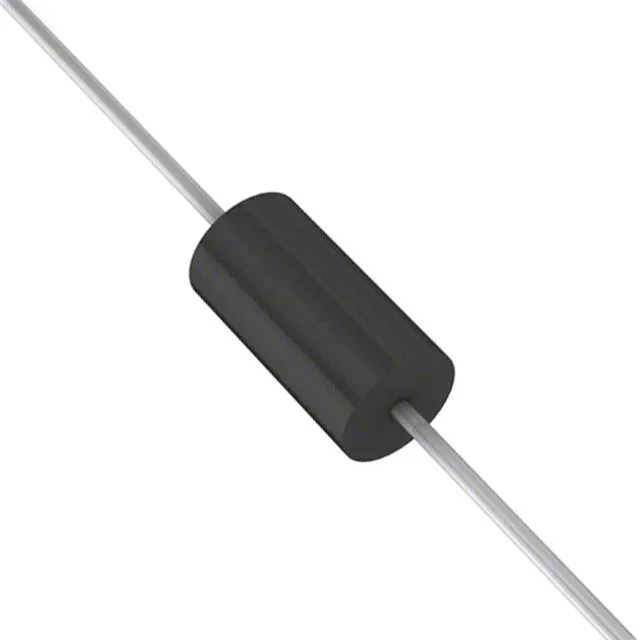
1500W bidirectional transient suppressor for 171V rails
The 1.5KE200CA: With a peak pulse power rating of 1500W (10/1000µs waveform), it handles surge events up to 5.5A while clamping at 274V maximum. The bidirectional configuration means a single device protects both polarities — useful on AC signal lines or DC buses where the polarity could reverse during a fault.
Breakdown and clamping — the numbers that matter for fit
The reverse standoff voltage of 171V is the maximum continuous DC voltage the TVS can sit across without conducting — a 170V bus or a 120VAC rectified rail (≈170V peak) is right at this limit. The breakdown voltage range starts at 190V minimum, so the device begins to avalanche above the normal operating level. Clamping at 274V maximum means the downstream components must survive that peak during a surge event; a 250V-rated capacitor would need a higher margin or a second stage of protection. The 5.5A peak pulse current (Ipp) at the 10/1000µs waveform is the current the TVS can sink while clamping. For a real-world lightning surge on a 171V telecom line, the actual current depends on the source impedance — a 10Ω source at 600V surge delivers about 43A peak, exceeding this device's rating, so a series resistor or a higher-power TVS upstream would be needed. The DO-201AA axial-lead package (also known as DO-27) is through-hole, requiring a drilled PCB hole and hand-solder or wave-solder assembly; the lead diameter is about 1.3mm, so the board footprint needs a 1.5mm plated hole minimum.